
Brazing:
Brazing is a metal joining processes, which is done by using the filler metal. It is heated above the melting point and distributed between two or more fitting parts by capillary action.

Types of brazing:
Sponsored Links:
Torch brazing:

In this technique filler material is melted by using oxyacetylene flame
Dip Brazing:
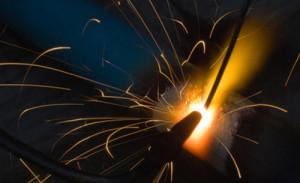
By creating molten liquid bath of filler material, it can be allowed to enter the joint by means of capillary action.
Induction brazing:
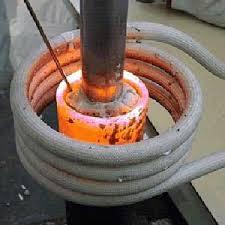
In this technique by supplying high-frequency power supply the filler material is converted into liquid form.
Furnace brazing:
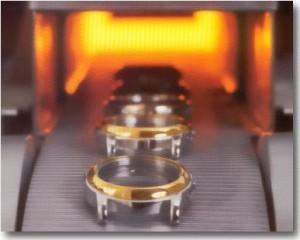
In this technique filler material is melted in the furnace with a controlled atmosphere
Types of soldering:
Solder rod: In this technique filler material is in the form of a solder iron rod. By using electrical current this filler material is melted and it is passed into the joint by means of capillary action.
Dip solder: In this technique a molten bath of filler material is produced and the joint is dipped into the filler material.
Induction brazing: In this technique by supplying high frequency power supply the filter material is converted into liquid form
Furnace brazing:
In this technique filler material is melted in the furnace in the presence of a controlled atmosphere
Types of soldering:
Solder rod:
In this technique filler material is in the form of a solder iron rod by using electrical current. This filler material will be melted and it is allowed into the joint by means of capillary action.
Dip Solder:
In this technique a molten bath of filler material is produced and the joint is dipped into the filler material
Wave soldering:
By creating a molten bath of liquid filler material the joint is provided near to the liquid metal. By creating a wave the liquid filler material becomes nearer to the joint and it must be made to enter into the joint by means of capillary action
Difference between Brazing and Soldering:
S.No | Brazing | Soldering |
1 | If the filler material melting point temperature is more than 423 and less than the melting point temperature of base material | If the filler material melting point temperature is less than 423  |
2 | Filler material is an alloy of copper and zinc, copper and aluminum, copper and silver it is known as spelter | Filler material is a an alloy of lead and tin this is known as solder |
3 | Filer material is enter in to the joint by means of capillary action | Filler material is enter in to the joint by means of capillary action |
4 | The strength of the joint is more | The strength of the joint is less |
5 | Flux is borax, boric acid, chloride and fluorides | Flux is zinc chloride, ammonium chloride |
6 | Mainly the process is used for the joining of pipes to produce leak proof joints | It will be used in electrode circuit design and printed circuit board |
7 | Joining of the tungsten carbide tips to the high speed steel cutting tool |
Post a Comment