A turbocharger or turbo is a forced induction device used to allow more power to be produced for an engine of a given size. A turbocharged engine can be more powerful and efficient than a naturally aspirated engine because the turbine forces more intake air, proportionately more fuel, into the combustion chamber than if atmospheric pressure alone is used. Turbo are commonly used on truck, car, train, and construction equipment engines. Turbo are popularly used with Otto cycle and Diesel cycle internal combustion engines. There are two ways of increasing the power of an engine. One of them would be to make the fuel-air mixture richer by adding more fuel. This will increase the power but at the cost of fuel efficiency and increase in pollution levels… prohibitive! The other would be to somehow increase the volume of air entering into the cylinder and increasing the fuel intake proportionately, increasing power and fuel efficiency without hurting the environment or efficiency. This is exactly what Turbochargers do, increasing the volumetric efficiency of an engine.
In a naturally aspirated engine, the downward stroke of the piston creates an area of low pressure in order to draw more air into the cylinder through the intake valves. Now because of the pressure in the cylinder cannot go below 0 (zero) psi (vacuum) and relatively constant atmospheric pressure (about 15 psi) there will be a limit to the pressure difference across the intake valves and hence the amount of air entering the combustion chamber or the cylinder. The ability to fill the cylinder with air is its volumetric efficiency. Now if we can increase the pressure difference across the intake valves by some way we can make more air enter into the cylinder and hence increasing the volumetric efficiency of the engine.
It increases the pressure at the point where air is entering the cylinder, thereby increasing the pressure difference across the intake valves and thus more air enters into the combustion chamber. The additional air makes it possible to add more fuel, increasing the power and torque output of the engine, particularly at higher engine speeds.
Turbochargers were originally known as Turbo superchargers when all forced induction devices were classified as superchargers; nowadays the term "supercharger" is usually applied to only mechanically-driven forced induction devices. The key difference between a turbocharger and a conventional supercharger is that the latter is mechanically driven from the engine, often from a belt connected to the crankshaft, whereas a turbocharger is driven by the engine's exhaust gas turbine. Compared to a mechanically-driven supercharger, turbochargers tend to be more efficient but less responsive.
HISTORICAL PERSPECTIVEThe turbocharger was invented by Swiss engineer Alfred Büchi. His patent for a turbocharger was applied for use in 1905. Diesel ships and locomotives with turbochargers began appearing in the 1920s.
AVIATION:During the First World War French engineer AugusteRateau fitted turbochargers to Renault engines powering various French fighters with some success. In1918, General Electric engineer Sanford Moss attached a turbo to a V12 Liberty aircraft engine. The engine was tested at Pikes Peak in Colorado at 4,300 m to demonstrate that it could eliminate the power losses usually experienced in internal combustion engines as a result of reduced air pressure and density at high altitude.
Turbochargers were first used in production aircraft engines in the 1920s, although they were less common than engine-driven centrifugal superchargers. The primary purpose behind most aircraft-based applications was to increase the altitude at which the airplane could fly, by compensating for the lower atmospheric pressure present at high altitude.
PRODUCTION AUTOMOBILES:The first turbocharged diesel truck was produced by Schweizer Maschinenfabrik Saurer (Swiss Machine Works Saurer) in 1938 .The first production turbocharged automobile engines came from General Motors in 1962. At the Paris auto show in1974, during the height of the oil crisis, Porsche introduced the 911 Turbo – the world’s first production sports car with an exhaust turbocharger and pressure regulator. This was made possible by the introduction of a waste gate to direct excess exhaust gasses away from the exhaust turbine. The world's first production turbo diesel automobiles were the Garrett-turbocharged Mercedes 300SD and the Peugeot 604, both introduced in 1978. Today, most automotive diesels are turbocharged.
1962 Oldsmobile Cutlass Jet fire
1962 Chevrolet Corvair Monza Spyder
1973 BMW 2002 Turbo
1974 Porsche 911 Turbo
1978 Saab 99
1978 Peugeot 604 turbo diesel
1978 Mercedes-Benz 300SD turbo diesel (United States/Canada)
1979 Alfa Romeo Alfetta GTV 2000 Turbodelta
1980 Mitsubishi Lancer GT Turbo
1980 Pontiac Firebird
1980 Renault 5 Turbo
1981 Volvo 240-series Turbo
OPERATING PRINCIPLEA turbocharger is a small radial fan pump driven by the energy of the exhaust gases of an engine. A turbocharger consists of a turbine and a compressor on a shared shaft. The turbine converts exhaust heat to rotational force, which is in turn used to drive the compressor. The compressor draws in ambient air and pumps it in to the intake manifold at increased pressure resulting in a greater mass of air entering the cylinders on each intake stroke.
The objective of a turbocharger is the same as a supercharger; to improve the engine's volumetric efficiency by solving one of its cardinal limitations. A naturally aspirated automobile engine uses only the downward stroke of a piston to create an area of low pressure in order to draw air into the cylinder through the intake valves. Because the pressure in the atmosphere is no more than 1 atm (approximately 14.7 psi), there ultimately will be a limit to the pressure difference across the intake valves and thus the amount of airflow entering the combustion chamber.
Because the turbocharger increases the pressure at the point where air is entering the cylinder, a greater mass of air (oxygen) will be forced in as the inlet manifold pressure increases. The additional air flow makes it possible to maintain the combustion chamber pressure and fuel/air load even at high engine revolution speeds, increasing the power and torque output of the engine. Because the pressure in the cylinder must not go too high to avoid detonation and physical damage, the intake pressure must be controlled by venting excess gas. The control function is performed by a waste gate, which routes some of the exhaust flow away from the turbine. This regulates air pressure in the intake manifold.
COMPONENTS OF A TURBOCHARGERThe turbocharger has four main components. The turbine (almost always a radial turbine) and impeller/compressor wheels are each contained within their own folded conical housing on opposite sides of the third component, the center housing/hub rotating assembly. The housings fitted around the compressor impeller and turbine collect and direct the gas flow through the wheels as they spin. The size and shape can dictate some performance characteristics of the overall turbocharger. The turbine and impeller wheel sizes dictate the amount of air or exhaust that can be flowed through the system, and the relative efficiency at which they operate. Generally, the larger the turbine wheel and compressor wheel, the larger the flow capacity. The center hub rotating assembly houses the shaft which connects the compressor impeller and turbine. It also must contain a bearing system to suspend the shaft, allowing it to rotate at very high speed with minimal friction. Waste gates for the exhaust flow.
 TURBINE WHEEL:
The Turbine Wheel is housed in the turbine casing and is connected to a shaft that in turn rotates the compressor wheel.
 COMPRESSOR WHEEL (IMPELLER)
Compressor impellers are produced using a variant of the aluminum investment casting process. A rubber former is made to replicate the impeller around which a casting mould is created. The rubber former can then be extracted from the mould into which the metal is poured. Accurate blade sections and profiles are important in achieving compressor performance. Back face profile machining optimizes impeller stress conditions. Boring to tight tolerance and burnishing assist balancing and fatigue resistance. The impeller is located on the shaft assembly using a threaded nut.
WASTE GATES:On the exhaust side, a Waste gate provides us a means to control the boost pressure of the engine. Some commercial diesel applications do not use a Waste gate at all. This type of system is called a free-floating turbocharger. However, the vast majority of gasoline performance applications require Waste gates. Waste gates provide a means to bypass exhaust flow from the turbine wheel. Bypassing this energy (e.g. exhaust flow) reduces the power driving the turbine wheel to match the power required for a given boost level.

ADVANTAGES
1. More specific power over naturally aspirated engine. This means a turbocharged engine can achieve more power from same engine volume.
2. Better thermal efficiency over both naturally aspirated and supercharged engine when under full load (i.e. on boost). This is because the excess exhaust heat and pressure, which would normally be wasted, contributes some of the work required to compress the air.
3. Weight/Packaging. Smaller and lighter than alternative forced induction systems and may be more easily fitted in an engine bay.
4. Fuel Economy. Although adding a turbocharger itself does not save fuel, it will allow a vehicle to use a smaller engine while achieving power levels of a much larger engine, while attaining near normal fuel economy while off boost/cruising. This is because without boost, less fuel is used to create a proper air/fuel ratio.
DISADVANTAGES
1. Lack of responsiveness if an incorrectly sized turbocharger is used. If a turbocharger that is too large is used it reduces throttle response as it builds up boost slowly otherwise known as "lag". However, doing this may result in more peak power.
2. Boost threshold- A turbocharger starts producing boost only above a certain rpm due to a lack of exhaust gas volume to overcome inertia of rest of the turbo propeller. This results in a rapid and nonlinear rise in torque, and will reduce the usable power band of the engine. The sudden surge of power could overwhelm the tires and result in loss of grip, which could lead to under steer/over steer, depending on the drive train and suspension setup of the vehicle. Lag can be disadvantageous in racing, if throttle is applied in a turn, power may unexpectedly increase when the turbo spools up, which can cause excessive wheel spin.
3. Cost- Turbocharger parts are costly to add to naturally aspirated engines. Heavily modifying OEM turbocharger systems also require extensive upgrades that in most cases requires most (if not all) of the original components to be replaced.
4. Complexity- Further to cost, turbochargers require numerous additional systems if they are not to damage an engine. Even an engine under only light boost requires a system for properly routing (and sometimes cooling) the lubricating oil, turbo-specific exhaust manifold, application specific downpipe, boosts regulation. In addition inter -cooled turbo engines require additional plumbing, while highly tuned turbocharged engines will require extensive upgrades to their lubrication, cooling, and breathing systems; while reinforcing internal engine and transmission parts.
TURBO LAG AND BOOSTThe time required to bring the turbo up to a speed where it can function effectively is called turbo lag. This is noticed as a hesitation in throttle response when coming off idle. This is symptomatic of the time taken for the exhaust system driving the turbine to come to high pressure and for the turbine rotor to overcome its rotational inertia and reach the speed necessary to supply boost pressure. The directly-driven compressor in a supercharger does not suffer from this problem. Conversely on light loads or at low RPM a turbocharger supplies less boost and the engine acts like a naturally aspirated engine. Turbochargers start producing boost only above a certain exhaust mass flow rate (depending on the size of the turbo). Without an appropriate exhaust gas flow, they logically cannot force air into the engine. The point at full throttle in which the mass flow in the exhaust is strong enough to force air into the engine is known as the boost threshold rpm. Engineers have, in some cases, been able to reduce the boost threshold rpm to idle speed to allow for instant response. Both Lag and Threshold characteristics can be acquired through the use of a compressor map and a mathematical equation.
APPLICATIONSGasoline-powered carsToday, turbocharging is commonly used by many manufacturers of both diesel and gasoline-powered cars. Turbo charging can be used to increase power output for a given capacity or to increase fuel efficiency by allowing a smaller displacement engine to be used. Low pressure turbocharging is the optimum when driving in the city, whereas high pressure turbocharging is more for racing and driving on highways/motorways/freeways.
Diesel-powered carsToday, many automotive diesels are turbocharged, since the use of turbocharging improved efficiency, driveability and performance of diesel engines, greatly increasing their popularity.
MotorcyclesThe first example of a turbocharged bike is the 1978 Kawasaki Z1R TC. Several Japanese companies produced turbocharged high performance motorcycles in the early 1980s. Since then, few turbocharged motorcycles have been produced.
TrucksThe first turbocharged diesel truck was produced by Schweizer Maschinenfabrik Saurer (Swiss Machine Works Saurer) in 1938.
AircraftA natural use of the turbocharger is with aircraft engines. As an aircraft climbs to higher altitudes the pressure of the surrounding air quickly falls off. At 5,486 m (18,000 ft), the air is at half the pressure of sea level and the airframe experiences only half the aerodynamic drag. However, since the charge in the cylinders is being pushed in by this air pressure, it means that the engine will normally produce only half-power at full throttle at this altitude. Pilots would like to take advantage of the low drag at high altitudes in order to go faster, but a naturally aspirated engine will not produce enough power at the same altitude to do so.
Here the main aim is to effectively utilize the non renewable energy such as petrol and diesel. Complete combustion of the fuels can be achieved. Power output can be increased. Wind energy can be used for air compression. We conclude that the power as well as the efficiency is increasing 10 to 15 % and pollution can also decrease. From the observation we can conclude that when the full throttle valve is open at that time the engine speed is 4000 rpm and by this the turbocharger generate 1.60 bar pressurized air. Generally the naturally aspirated engine takes atmospheric pressurized air to the carburetor for air fuel mixture but we can add the high density air for the combustion so as the result the power and the complete combustion take place so efficiency is increasing.


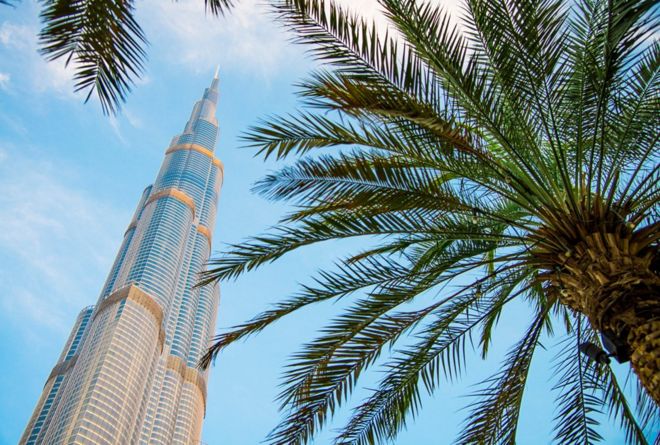 For that sum you could build a small forest of Burj Khalifas - the world's tallest building, in Dubai, cost a piffling £1bn ($1.5bn). You could also knock up more than 70 miles of particle accelerator. The 17-mile-long Large Hadron Collider, built under the border between France and Switzerland to unlock the secrets of the universe, cost a mere £4bn ($5.8bn).
 So why is Hinkley C so expensive?
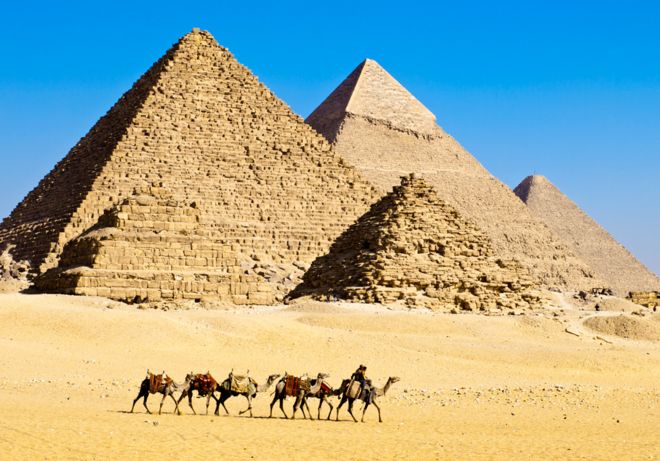 Working out the cost of something built more than 4,500 years ago presents numerous challenges, but in 2012 the Turner Construction Company estimated it could build the pyramid for between £750m ($1.1bn) and £900m ($1.3bn).
 The Great Wall of China was an even bigger project than the pyramid. At 5,500 miles long, its mass is almost certainly greater. But it is actually a large number of walls, pieced together over two millennia, stretching the definition of "object".
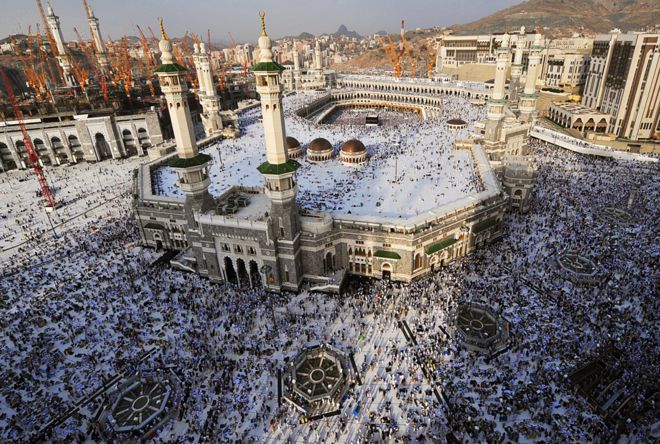 Another contender is Hong Kong International Airport, built in 1998 on an artificial island at a cost of £13.7bn ($20bn) - equivalent to £20.1bn ($29bn) at today's prices. That just pips EDF's estimate for the cost of Hinkley C (though remember, we are putting to one side the cost of financing the deal).