The panda at your local zoo may look like it's at home in its cozy sanctuary. But unless you live in China, the pandas that you're seeing are just visiting. That's because every one of the gentle giants in zoos around the world are on loan from China. Yes, they're technically the property of the government of China, according to Vox.
But any panda can be taken away
China's making longer panda loans now than it used to — the loan to Belgium is 15 years long — and tends to extend the loans before they expire. But just as politics inflect when China gives out pandas, it's also a factor in when they take them away.
Buckingham and her coauthors see the tale of Tai Shan as a cautionary tale to governments with loaned pandas: if your guests become too popular with the public, you might find yourself pressured to agree to Chinese demands. After all, Buckingham points out, pandas "speak to the public" in a way most diplomatic concerns don't.
A team of Chinese scientists has reportedly developed a novel way to combat the novel coronavirus which has killed over 32,000 people globally.
According to Global Times, the new weapon is not a drug or a compound but some nanomaterial.
Nanomaterials are used in a variety of manufacturing processes, products and healthcare including paints, filters, insulation and lubricant additives.
In healthcare, Nanozymes are nanomaterials with enzyme-like characteristics.
According to the US NIH, scientists have not unanimously settled on a precise definition of nanomaterials, but agree that they are partially characterized by their tiny size, measured in nanometers.
“Nanotechnology can be used to design pharmaceuticals that can target specific organs or cells in the body such as cancer cells, and enhance the effectiveness of therapy,” said NIH.
However, while engineered nanomaterials provide great benefits, “we know very little about the potential effects on human health and the environment. Even well-known materials, such as silver for example, may pose a hazard when engineered to nano size,” according to NIH.
True or false? A new nuclear power station in the south-west of the UK will be the most expensive object on Earth. That's the claim about the proposed plant at Hinkley Point in Somerset - but has anything else ever cost so much to build?
"Hinkley is set to be the most expensive object on Earth… best guesses say Hinkley could pass £24bn ($35bn)," said the environmental charity Greenpeace last month as it launched a petition against the project.
This figure includes an estimate for paying interest on borrowed money, but the financing arrangements for Hinkley C are so opaque that it is impossible to calculate exactly what the final cost will be.
Even if you stick with the expense of construction alone, though, the price is still high - the main contractor, EDF, puts it at £18bn ($26bn).
For that sum you could build a small forest of Burj Khalifas - the world's tallest building, in Dubai, cost a piffling £1bn ($1.5bn). You could also knock up more than 70 miles of particle accelerator. The 17-mile-long Large Hadron Collider, built under the border between France and Switzerland to unlock the secrets of the universe, cost a mere £4bn ($5.8bn).
The most expensive bridge ever constructed is the eastern replacement span of the Oakland Bay Bridge in San Francisco, designed to withstand the strongest earthquake seismologists would expect within the next 1,500 years. That cost about £4.5bn ($6.5bn).
So why is Hinkley C so expensive?
"Nuclear power plants are the most complicated piece of equipment we make," says Steve Thomas, emeritus professor of energy policy at Greenwich University.
"Cost of nuclear power plants has tended to go up throughout history as accidents happen and we design measures to deal with the risk."
In comparison, the UK's newest nuclear power station, Sizewell B, which was completed in 1995, only cost £2.3bn ($3.4bn), or £4.1bn ($6bn) at today's prices.
No nuclear power plants have been completed in Europe this century - those that have been built in recent years are in countries such as China or India, and Thomas believes figures for these, where they exist, are not reliable.
Hypersonic weapons incorporate the speed of a ballistic missile with the maneuvering capabilities of a cruise missile. Hypersonic weapons refer to weapons that travel faster than Mach 5 (~3,800mph) and have the capability to maneuver during the entire flight. As a pentagon report stated, “While the designed speed of the hypersonic missile is faster than that of sound, its advantage lies in its enhanced maneuverability and smooth flight path, which is much harder to track than that of traditional missiles.”
Hypersonic weapons are specifically designed for increased survivability against modern ballistic missile defense systems. These missiles are capable of delivering conventional or nuclear payloads at ultra-high velocities over long ranges. Hypersonic missiles are delivered in two ways: (1) they can be fired from the last stages of Intercontinental Ballistic Missiles (ICBM) or Submarine-Launched Ballistic Missiles (SLBM) and skip along the top of the atmosphere using specialized jet engines to accelerate to hypersonic speeds; or (2) they can be launched independently or released from a bomber—similar to cruise missiles—before accelerating to ultra-high speeds.
Hypersonic vehicles typically consist of a Supersonic Combustion Ramjet, or Scramjet propulsion system to enable such high speeds. A Scramjet engine is an engine that uses “air breathing” technology. This means that the engine collects oxygen from the atmosphere as it is traveling and mixes the oxygen with its hydrogen fuel, creating the combustion needed for hypersonic travel. This is different than a traditional ramjet, which is used on space shuttles and satellite launches. The traditional ramjet engine carries liquid oxygen, and hydrogen together, adding a tremendous amount of weight to the vessel. Most of the added weight comes from the liquid oxygen (the oxidizer), which is nearly 70% of the fuel used in space launches.
For a scramjet to work the air traveling into the engine must already be at supersonic speed. This is so the air is properly condensed to the required density to effectively combust with the hydrogen mix. To reach supersonic speed, the vessel is usually launched with a traditional booster engine, and once it has reached the proper speed and altitude (generally around Mach 5 and 100,000ft) the scramjet is activated.
Other options currently in development are dual mode ramjet (DMRJ), which works as a ramjet until the craft reaches proper speed and altitude, and then begins to work as a scramjet. By using the DMRJ, the vessel can operate without a booster, which allows it to operate in a more clandestine manner.
In contrast to conventional Reentry Vehicles (RV) that travel at supersonic speeds (between Mach 1 and Mach 5), hypersonic weapons travel along the edge of space and accelerate to between Mach 5 (around 3,800 mph) and Mach 10 (over 7,500 mph). While conventional ballistic missiles are launched at steep trajectories that inhibit speed during the high friction of launch and reentry, hypersonic missiles glide atop the atmosphere while engaging specialized jet engines to perpetually accelerate up to hypersonic speeds.
This ability to travel at ultra-high velocity is the primary appeal of hypersonic missiles because it extends their range and allows them to bypass modern layered missile defenses. Hypersonic missiles are also capable of maneuvering in flight, allowing them to evade missile defense tracking systems and interceptors. This is in contrast to conventional RVs, which descend through the atmosphere on a predictable ballistic trajectory that can be tracked and intercepted by modern missile defense systems.
Arun Mehta is an Indian software developer and a disability activist. At the request of Stephen Hawking, he, along with Vickram Crishna, developed a free and open source software named eLocutor, to allow severely disabled person to write and speak.
One of science’s biggest celebrities since Albert Einstein, renown cosmologist Stephen Hawking passed away at the age of 76 in the early hours of Wednesday. The author of the best-selling book A Brief History of Time was born on January 9, 1942 (the 300th death anniversary of Galileo) and died on Wednesday (the 139th birthday of Einstein).
In India, fans and well-wishers of the pioneering physicist took to social media to pay their heartfelt tributes to one of the greatest minds of our time. However, few of them know that it was a technology developed by Indian engineers that helped Professor Hawking (who lost his voice in 1985 after a tracheotomy) talk again.
Mehta and Crishna
In January 2001, Stephen Hawking arrived in India for the first time for a 16-day long tour he would later describe as “magnificent”.
In the first leg of the tour in Mumbai, Hawking attended an international physics seminar at the Tata Institute of Fundamental Research (TIFR), delivered the Albert Einstein Memorial Lecture (titled ‘Predicting the Future: From Astrology to Black Holes’) and celebrated his 59th birthday on January 8, 2001 at the Oberoi Towers hotel where he stayed.
Following this, Hawking — who had been diagnosed with Lou Gehrig’s disease (better known as ALS) when he was just 21 — travelled around Mumbai in a specially redesigned vehicle that could accommodate his wheelchair.
It was during this time that his aides began reaching out to several people and organisations who could help write a software program that would help Hawking communicate through his computerised wheelchair (he had been facing problems with the software he was using at the time).
The men who decided to take up this challenge were Arun Mehta and Vickram Crishna, the latter of whom had met Hawking in Mumbai.
eLocutor
Single Button Typing and Speaking SoftwareProfessor Stephen Hawking and many like him can only operate a single button. Their ability to communicate with the world hinges on software that allows them to efficiently enter text into a computer and have it spoken for them, only through the operation of this single button. eLoctor was designed for Prof. Hawking to allow him to Type, Speak, and Command the computer.
eLocutor is distributed under GPL and is free.
In the 2007 OReilly publication "Beautiful Code", in which Leading Programmers Explain How They Think. In the book Dr. Arun Mehta wrote a Chapter on eLocutor "When a Button Is All That Connects You to the World".
The Active Denial System (ADS) is a non-lethal, directed-energy weapon developed by the U.S. military, designed for area denial, perimeter security and crowd control. Informally, the weapon is also called the heat ray since it works by heating the surface of targets, such as the skin of targeted human subjects. On August 20, 2010, the Los Angeles Sheriff's Department announced its intent to use this technology on prisoners in the Pitchess Detention Center in Los Angeles, stating its intent to use it in "operational evaluation" in situations such as breaking up prisoner fights. As of 2014, the ADS was only a vehicle-mounted weapon, though U.S. Marines and police were both working on portable versions. ADS was developed under the sponsorship of the Department of Defense Non-Lethal Weapons Program with the Air Force Research Laboratory as the lead agency. There are reports that Russia and China are developing their own versions of the Active Denial System. Effects
The ADS works by firing a high-powered beam of 95 GHz waves at a target, which corresponds to a wavelength of 3.2 mm. The ADS millimeter wave energy works on a similar principle as a microwave oven, exciting the water and fat molecules in the skin, and instantly heating them via dielectric heating. One significant difference is that a microwave oven uses the much lower frequency (and longer wavelength) of 2.45 GHz. The short millimeter waves used in ADS only penetrate the top layers of skin, with most of the energy being absorbed within 0.4 mm, whereas microwaves will penetrate into human tissue about 17 mm.
The ADS's effect of repelling humans occurs at slightly higher than 44 °C (111 °F), though first-degree burns occur at about 51 °C (124 °F), and second-degree burns occur at about 58 °C (136 °F). In testing, pea-sized blisters have been observed in less than 0.1% of ADS exposures, indicating that second degree surface burns have been caused by the device.
And, finally, the good news. While Covid-19 spreads through the air on respiratory droplets, there is one fact limiting how far the virus can travel: its weight. Coronaviruses are physically larger and heavier than other known respiratory viruses. So while Covid-19 infects hosts via mucus droplets, its infectious range is lower relative to other viruses because its mass limits how far it can travel before succumbing to gravity. Case in point, coronaviruses can only travel about one to two meters, less than seven feet, before they start falling to the ground. Compare that to much more infectious viruses like measles or chickenpox, both of which are much lighter and able to remain airborne on tiny dust particles.
Warren buffet has rightly said that ‘if you don’t find a way to make money while you sleep, you will work until you die.’ This quote emphasizes on investments and making more money out of money already earned. Most people resort to stock market for investing their hard-earned money. But, it is never easy to make money by investing or trading in stock markets. The stock markets are highly volatile and your investments are exposed to high risks. Trust me, many a people have lost lacs and crores in this market. Again, the story is not the same for all. Many have accumulated good wealth.
#5 – Ramesh Damani – Well known investor in India
Ramesh Dhamani is well-known for his investments in listed and unlisted companies. He is recognized for picking high quality stocks and retaining them for long time. He follows the model of Warren Buffet for investing that favors companies with strong management credentials and processes. He did a lot of right things in his career that fetched him millions of rupee.
#4 – Nemish Shah – One of the most successful top 10 retail investor
Mr. Nemish Shah is the co-founder of one of the most reputed and respectable investment houses named ENAM. He is a very simple man who keeps himself away from media and publicity. His investment ideas are brilliant and most sought after. He invested in Asahi India and multiplied his funds to 3.4 times in 3 years. He does not invest in too many stocks, instead concentrate on limited stocks and highly sector-driven. He is one of the top 10 retail investors of India with net worth of Rs 1,300 crore.
#3 – Vijay Kedia – From the family of stock brokers now turned to be successful investor
Born in the family of stock-brokers, Vijay Kedia started his career in stock market in 1978 not because of choice but of compulsion as his father died. So, to earn the bread-butter for his family, he joined the family business of trading and stock-broking. Initially, he was not doing well. But, he did not lose hope and read about the stories of successful investors. He decided to switch in investing. He started learning about the fundamentals of companies. He owned Rs 35,000 at that time and by his own study, he invested the entire amount in a stock named Punjab Tractor. In 3 years, the stock multiplied 6 times and his Rs 35,000 grew into Rs. 2.1 Lakhs. Thereafter, he invested in ACC at the rate of Rs. 300. After a year, the stock multiplied 10 times and moved to Rs. 3,000 in second year. He continued to make successful investments in various stocks to create a wealth of 500 crores. His biggest success mantra is ‘knowledge to find out quality stocks which one can acquire only by reading. If one doesn’t have reading habits, he can’t be a good investor.’
Vijay Kedia is betting now on Everest Industries and Vaibhav Global as multibagger stocks for 2018.
#2 – Porinju Veliyath – Midclass Family member turned to CEO of Equity Intelligence
Porinju Veliyath was born in year 1962 in the lower middle-class family in Kochi. His early life was full of struggles. He joined various jobs along with studies to support his family. He went Mumbai in 1990 in search of job. He was appointed as a floor trader at Kotak Securities there. Stock Market was totally new field for him. Within a short span of time, he learned the in and out of stock market and became an expert trader. He worked for 4 years there and gained a lot of knowledge. In 1994, he joined Parag Parikh Securities as a Research Analyst and fund manager. In 1999, he returned to Kochi and decided to make money on his own from the stock market. He made his first major investment in ‘Geojit Financial Services’. The stock was trading at a very low value at that time. Proving everybody wrong, this investment gave him manifold returns. In 2002, he started his own portfolio management service (PMS) firm in the name of ‘Equity Intelligence’. Today, he is one of the most well-known investor and fund-manager of recent times. Equity Intelligence stock picks like Emkay Global Financial Services and BCL Industries has rised by 200% in their share prices and IZMO and Vista Pharma rised by 100% in their share prices.
Popularly known as Warren Buffet of Indian stock market, Rakesh Jhunjhunwala entered the Indian market in 1985. He inherited the interest in stock trading from his father who used to discuss with his friends and Rakesh used to listen them keenly. He joined the Chartered Accountancy course to acquire a professional degree and completed in 1985. Thereafter, he joined Stock Market and started trading. His first biggest hit was 5000 shares of Tata Tea which he got for Rs 43 and sold for Rs143 in just 3 months. This gave him Rs. 5 Lakh which was a big deal at that time. His next big bet was Sesa Goa. He purchased 4 lakh shares and accumulated huge profits in it. There are a lot of stocks that made large sums of money for him like Lupin, Crisil etc.
Today his portfolio is worth over Rs. 20,000 crores / 3.2 Bn Dollars which consists of Titan, Lupin and CRISIL as top holdings now. He is a renowned trader and investor of Indian stock market and called as Indian Warren Buffet.
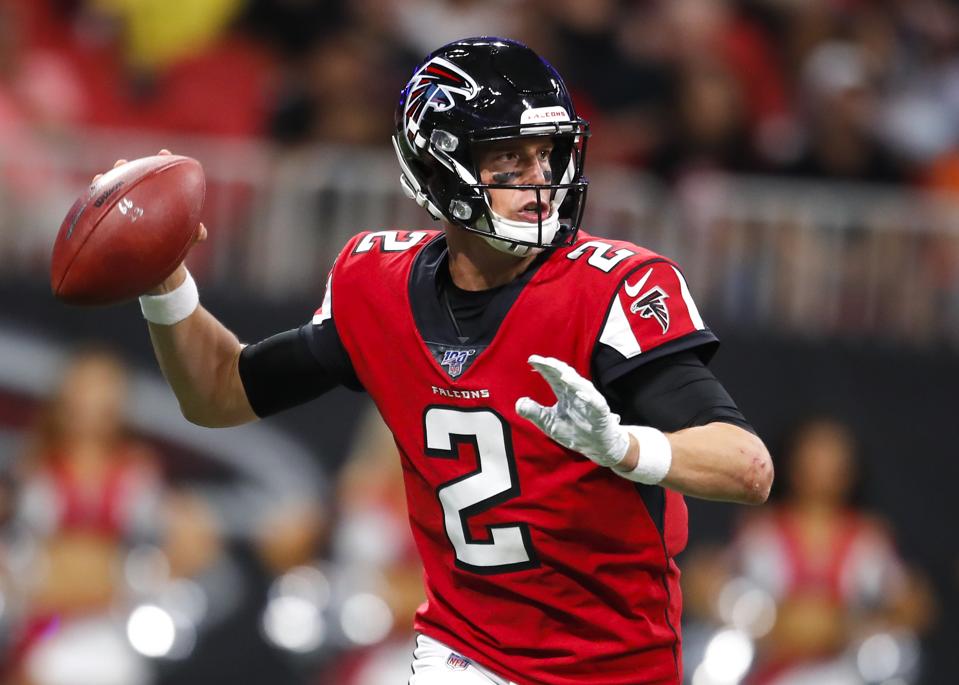
Ryan was the first NFL player to get paid an average of $30 million per season with the five-year, $150 million deal he signed in 2018. The 2016 NFL MVP restructured his contract in 2019 to clear salary-cap space for the Falcons and received nearly $9 million of his base salary upfront. Ryan counts Nike, Southern Co., Gatorade, IBM and Mercedes among his ten endorsement partners. Ryan’s earnings don’t include the $23.25 million portion of his 2018 signing bonus deferred to April 2019; we counted those earnings last year.
9. Brandin Cooks
GETTY IMAGES
Total earnings: $28 million
Salary/bonuses: $27.5 million
Endorsements: $500,000
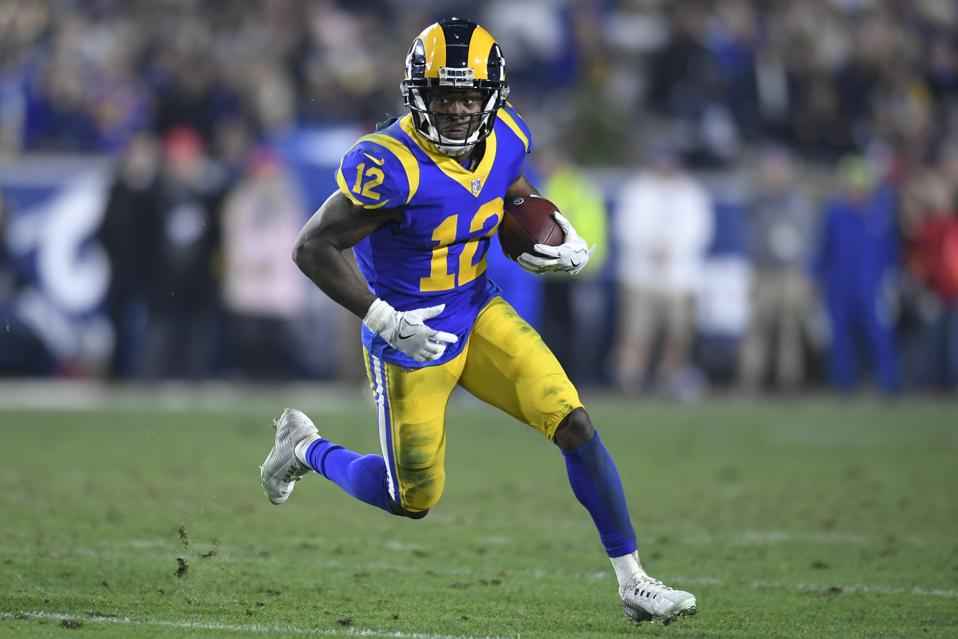
After being traded from the New England Patriots to the Los Angeles Rams in early 2018, Cooks signed a five-year, $81 million contract. In March, the Rams exercised a $17 million option bonus under the pact; it extended the deal through 2023. Cooks has topped 1,000 receiving yards in each of the last four seasons.
8. Trey Flowers
GETTY IMAGES
Total earnings: $29.1 million
Salary/bonuses: $28.9 million
Endorsements: $250,000
Flowers signed a five-year, $90 million free-agent contract with the Detroit Lions in March that included $56 million in guaranteed money. It made the two-time Super Bowl winner the sixth-highest-paid defensive player and third-highest-paid defensive end in the NFL. He led the Patriots in quarterback sacks in each of the last three seasons.
7. Kirk Cousins
GETTY IMAGES
Total earnings: $29.8 million
Salary/bonuses: $28 million
Endorsements: $1.8 million
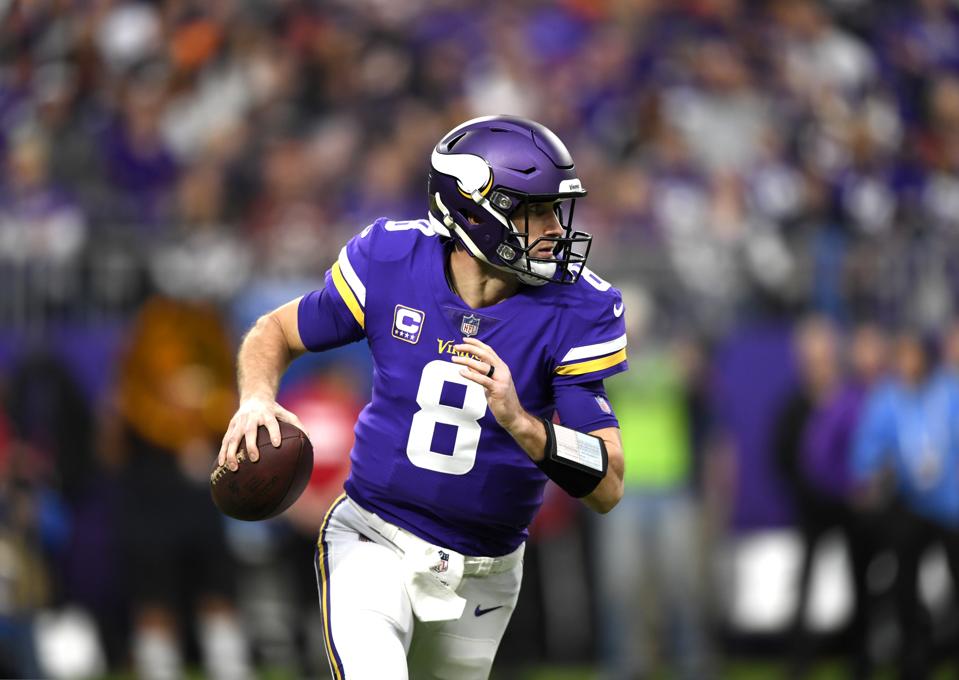
Cousins cashed in last year with the Minnesota Vikings to the tune of $84 million over three years. The pact is unique for multiyear NFL contracts, in that 100% of the money is guaranteed. Cousins finished second in the NFL for completion percentage during his first year in Minnesota and threw for 30 touchdowns against 10 interceptions.
6. DeMarcus Lawrence
GETTY IMAGES
Total earnings: $31.3 million
Salary/bonuses: $31.1 million
Endorsements: $150,000
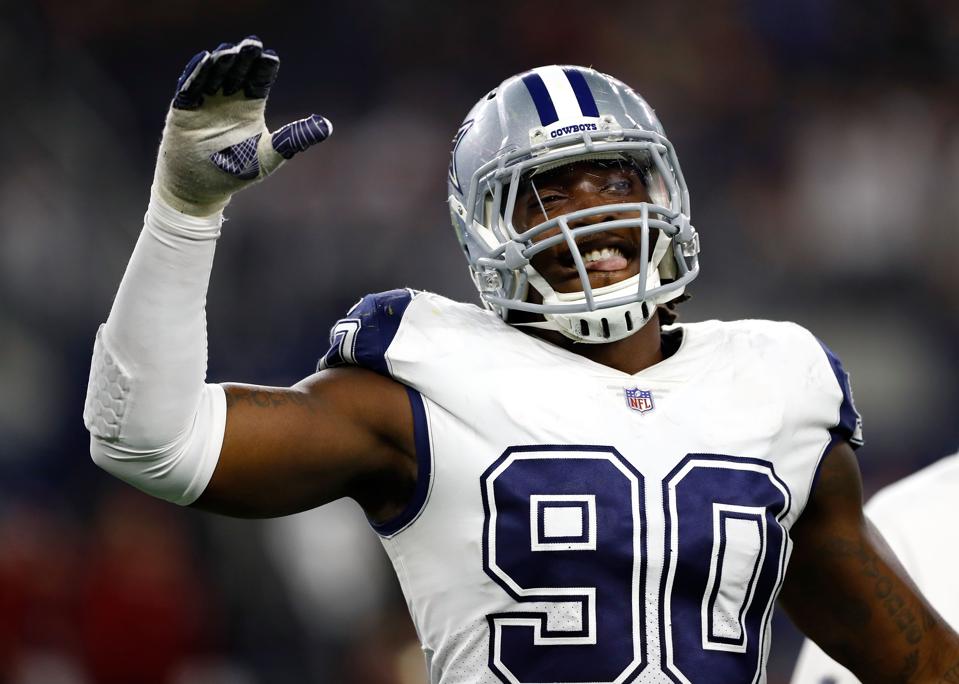
Lawrence signed a five-year, $105 million extension in April that is set to keep him in Dallas through 2023. His $21 million average salary is the highest among defensive ends. Lawrence is tied for the fourth-most sacks since the start of 2017.
5. Nick Foles
GETTY IMAGES
Total earnings: $32.8 million
Salary/bonuses: $30.8 million
Endorsements: $2 million
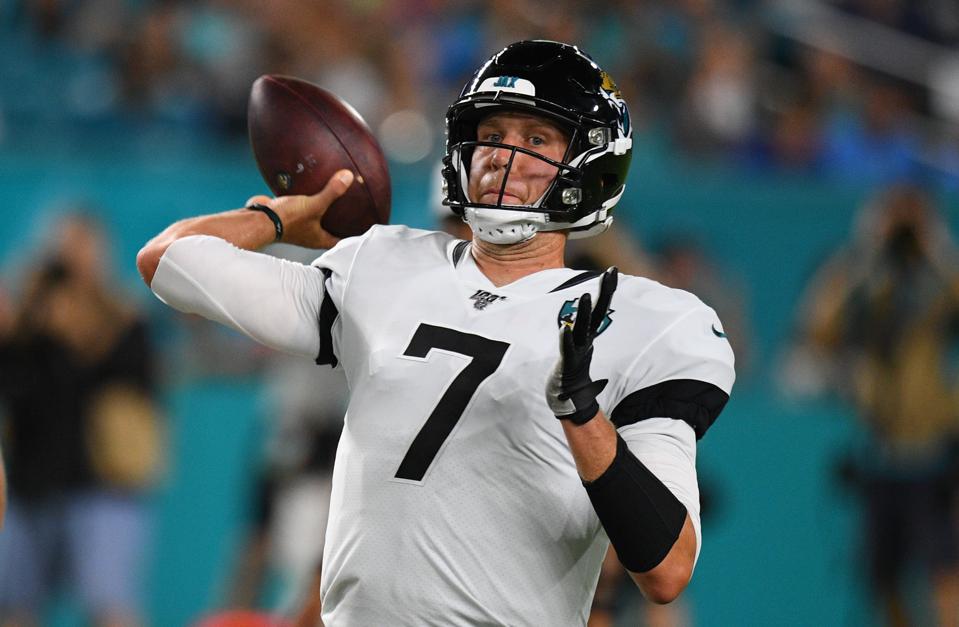
In March, Foles signed a four-year deal with the Jacksonville Jaguars worth $88 million, including $50 million guaranteed. The former backup earned MVP honors while leading the Philadelphia Eagles to the team’s first-ever Super Bowl win in 2018. Foles became the first mainstream athlete endorser of apparel brand Lululemon this year.
4. Tom Brady
GETTY IMAGES
Total earnings: $35 million
Salary/bonuses: $23 million
Endorsements: $12 million
Brady signed a new deal with the Patriots that will pay him $23 million this year. It is a bargain price for the six-time Super Bowl champ, with 12 quarterbacks earning more on a per-year basis. Brady is the NFL’s most marketable player, but he has focused on his TB12 lifestyle brand in recent years, eschewing most of the endorsements he is offered. Brady did sign on to pitch online startup Molecule Mattresses last year and received an equity stake in the company. His latest endorsement deal is with luxury Swiss watch brand IWC.
3. Drew Brees
GETTY IMAGES
Total earnings: $39 million
Salary/bonuses: $23 million
Endorsements: $16 million
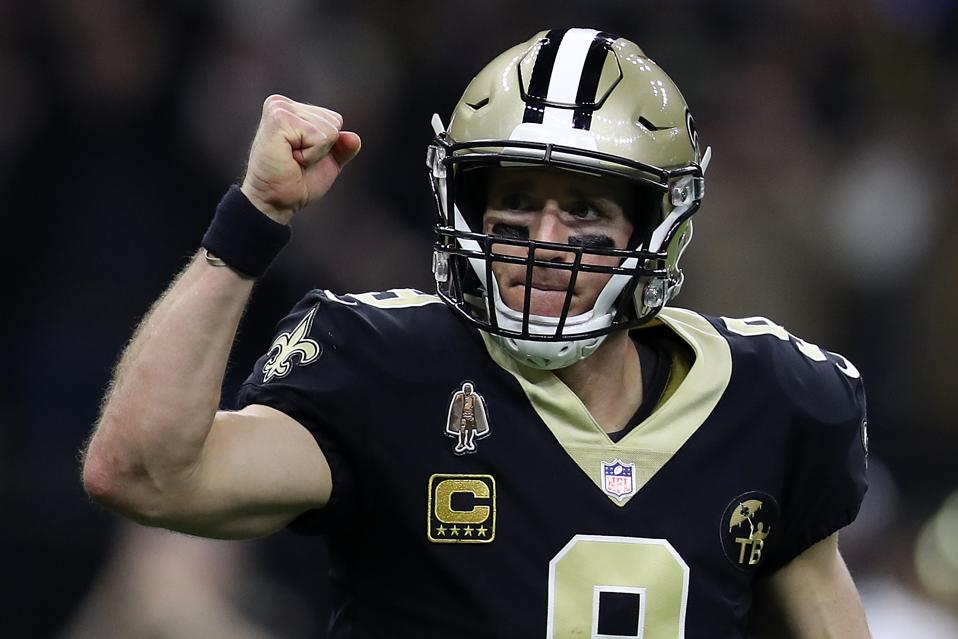
Brees is the NFL’s career leader in passing yards and has received 12 Pro Bowl nods, the third most ever. He signed a two-year contract extension with the New Orleans Saints in 2018 worth $50 million and restructured the deal in March to free cap space for his team. The 18-year veteran has earned more than $220 million in onfield pay across his career, and he leads all NFL players in off-the-field money this year. Brees owns more than a dozen Jimmy John’s and Dunkin’ franchises. He also invested in food delivery service Waitr. His foundation has donated more than $25 million to causes and academic institutions in the New Orleans, San Diego and West Lafayette/Purdue communities.
2. Ben Roethlisberger
GETTY IMAGES
Total earnings: $46 million
Salary/bonuses: $45 million
Endorsements: $1 million
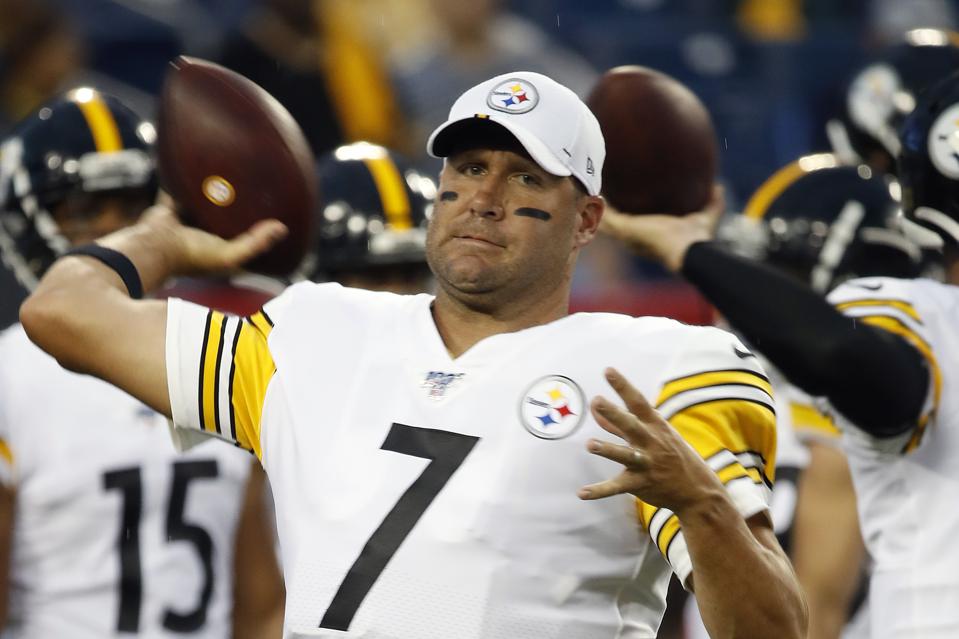
Big Ben, who received a $37.5 million signing bonus with the contract extension he signed in April, is one of only 13 starting quarterbacks to have won multiple Super Bowls. Since being selected No. 11 overall in the 2004 NFL Draft, Roethlisberger has earned $232 million in salary from the Steelers, fourth highest among active players.
1. Russell Wilson
GETTY IMAGES
Total earnings: $79 million
Salary/bonuses: $70 million
Endorsements: $9 million
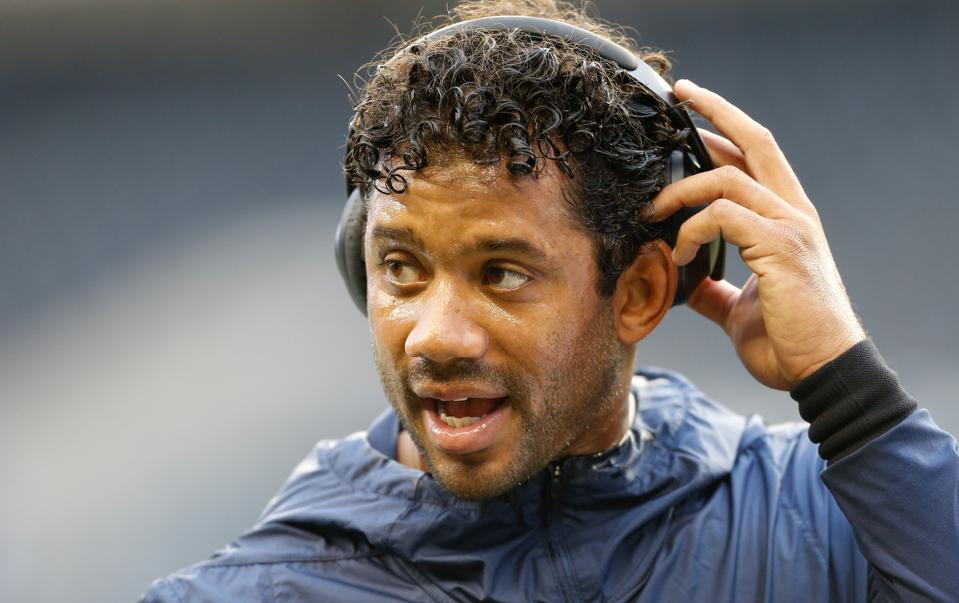
Wilson and his wife, Ciara, recently joined the ownership group of the Seattle Sounders, the MLS franchise. Wilson, who was drafted by the Colorado Rockies in 2010, is also an investor in the Portland Diamond Project, which aims to bring an MLB team to Oregon.
Most taxpayers will get a check from the $2tn economic package, the largest in US history
The US has agreed on a $2tn stimulus package, the largest economic stimulus in US history, in response to the economic impacts of Covid-19. While corporations will be the biggest recipients of the bailout, some of that money will be paid directly to Americans hit by the pandemic.
Most taxpayers will get a check in the mail, while those directly impacted by the economic effects of Covid-19 are slated to receive robust government support.
Here’s what we know so far about how the new stimulus package will directly affect Americans in the coming weeks:
Who’s eligible for a check from the government?
Congress will spend about $250bn for checks up to $1,200 per person that will go directly to taxpayers.
To be eligible for the full amount, a person’s most recently filed tax return must show that they made $75,000 or under. For couples, who can receive a maximum of $2,400, the cutoff is $150,000.
If a person makes more than $75,000, the amount given goes down incrementally by $5 for every $100 increase in salary. So a person who makes $85,000 would get $700 while a person who makes $95,000 would get $200.
If a person makes above $99,000, or a couple makes above $198,000, no check will be given.
The Tax Foundation, a DC-based thinktank, estimates that 93.6% of Americans will be eligible for a check coming from the stimulus package.
What about parents?
Taxpayers will be given $500 per child listed as a dependent on their latest tax return.
When will I get this money?
That is still unclear. Experts say that Americans will likely not get the money until May, given how long it takes the Internal Revenue Service (IRS) to send out checks. Treasury secretary Steven Mnuchin said the White House wants the checks out in two weeks but the logistics of sending them will likely make the wait a bit longer.
This is not the first time the government has sent checks to Americans. The federal government gave up to $300 in 2001 and $600 in 2008 to taxpayers who met a certain income bracket to similarly stimulate the economy.
Does the package help unemployed workers?
Yes, specifically the bill will increase unemployment insurance by $600 for 13 weeks – about four months – for every person, added to the existing unemployment compensation a person gets from their state’s program.
The length and amount of compensation varies from state to state. A majority of states providing a maximum of 26 weeks of compensation, while average weekly compensation ranges from 20% of a person’s wage to just over 50%.
What about freelance and gig workers?
Advertisement
While unemployment insurance typically does not cover people who are self-employed – freelancers, contractors and gig workers – the bill comes with a “pandemic unemployment assistance” measure that will extend insurance to those workers.