Showing posts with label smartphone. Show all posts


Smartphones today come with a wealth of sensors to facilitate a better user experience, provide apps with enhanced information about the world around the phone and provide robust and increased battery life.

Proximity Sensor

Detects when an object is near to the phone. Most commonly used to sense when a phone is held up to the users ear to turn off the display. This saves both battery life and prevents accidental screen touches.

Accelerometer and gyroscope

Accelerometers in mobile phones are used to detect the orientation of the phone. The gyroscope, or gyro for short, adds an additional dimension to the information supplied by the accelerometer by tracking rotation or twist.

An accelerometer measures linear acceleration of movement, while a gyro on the other hand measures the angular rotational velocity. Both sensors measure rate of change; they just measure the rate of change for different things.

In practice, that means that an accelerometer will measure the directional movement of a device but will not be able to resolve its lateral orientation or tilt during that movement accurately unless a gyro is there to fill in that info.

With an accelerometer you can either get a really “noisy” info output that is responsive, or you can get a “clean” output that’s sluggish. But when you combine the 3-axis accelerometer with a 3-axis gyro, you get an output that is both clean and responsive in the same time.”

Accelerometers are also used to provide ‘steps’ information for a vendors ‘health’ application.


Digital compass

The digital compass that’s usually based on a sensor called the magnetometer and provides mobile phones with a simple orientation in relation to the Earth’s magnetic field. As a result, your phone always knows which way is North so it can auto rotate your digital maps depending on your physical orientation.


GPS

Global Positioning System (GPS) units in smartphone communicate with the satellites to determine our precise location on Earth. The GPS technology doesn’t actually use internet data this is why we can find our location on maps even after losing the signals, but the map itself is blurry as it requires internet to load the details — this is how offline map works. GPS is used in all location-based apps like Uber and Google Maps.

The accelerometer, gyroscope, magnetometer, and GPS work together to create the perfect navigation system in your smartphone.


Ambient Light Sensor

The light sensor detects the lighting levels in the vicinity to adjust the display brightness accordingly. It is used in Automatic Brightness Adjuster to decrease or increase the brightness of the smartphone screen based on the availability of light.

Microphone

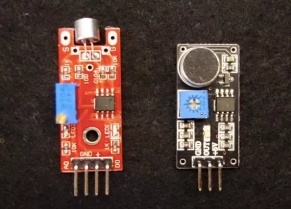
The microphone is basically a sound sensor that detects and measures the loudness of sound. While there are different types of microphone sensors available, smartphones generally use micro-sized electret microphones.

Apart from making and receiving calls, it is used for voice search and voice commands for digital assistant apps like Google Assistant, Siri, Cortana, etc.

Touchscreen Sensors

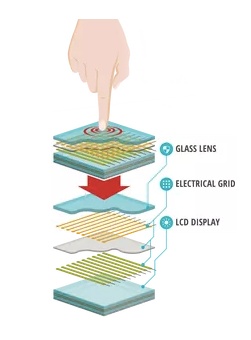
The smartphone sensors in a touchscreen have an electrical current passing through them at all times and touching the screen causes a change in the signals. This change acts as input for the device. Before Apple introduced the capacitive touchscreen, resistive screens were used in the display. But nowadays, the capacitive screen is used in almost all smartphones.

Fingerprint Sensor

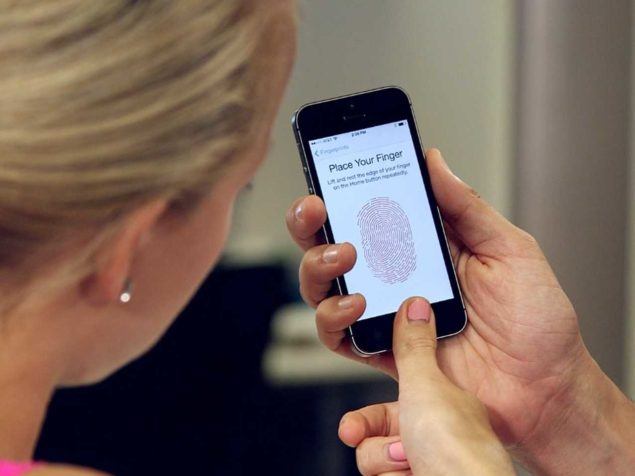
Gone are the days of memorizing passwords and patterns to unlock your phone as many users prefer using the fingerprint scanner these days. Fingerprint sensor enables biometric verification to secure many smartphones today. It is a capacitive scanner that records your fingerprint electrically.

When you put your finger on its surface, the ridges in your fingerprints touch the surface whereas the hollows between the ridges have a slight separation. In short, it measures the varying distances and pattern between the ridges on the surface of your finger. This smartphone sensor is quite useful in apps that require authentication such as mobile payment apps.

Pedometer


The pedometer is used for counting steps, and fitness tracker makes use of this sensor to count the number of steps you take. Pedometers generally use the values generated by the accelerometer to monitor your movements like running or walking.

Barcode/QR Code sensors

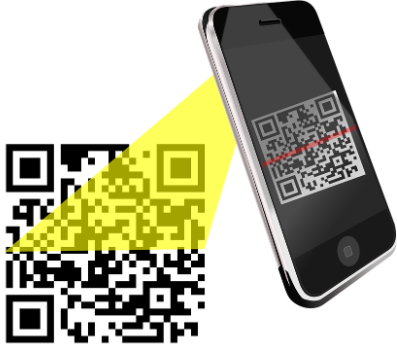
Most of the smartphones have barcode sensors that can read a barcode by detecting the reflected light from the code. It generates an analog signal with varying voltage that represents the barcode. This analog signal is then converted to a digital one and finally decoded to reveal the information in it. Barcode sensors are useful in scanning the barcodes products or QR codes.

Barometer

There are many high-end Android phones like Pixel and iPhones that include a barometer in their hardware. The barometer measures the air pressure, so it is quite useful in detecting weather changes and in calculating the altitude you’re at.

Heart Rate Sensor

Next up is the heart rate sensor that measures heartbeat with the help of LED and optical sensors. The LED emits light towards the skin, and this smartphone sensor looks for the light waves reflected by it.

There is a difference in the light intensity when there is a pulse. The heartbeat is measured by counting the changes in light intensity between the minute pulsations of the blood vessels. Many fitness and health apps use this method to calculate the heart rate.

Thermometer

Every smartphone comes with an inbuilt thermometer for monitoring the temperature inside the device and battery. In case a component starts overheating, the system shuts down itself to prevent any damage.

However, some handsets come with additional thermometers to measure ambient temperature. If you can recall, the Samsung Galaxy S4 bragged of thermometer that can measure temperature. Such thermometer sensors can be used by apps to detect your room temperature.

Air Humidity Sensor

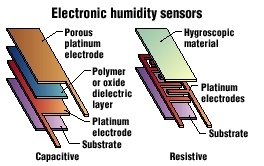
Now that we are talking about Galaxy S4 let’s discuss the Air Humidity sensor as well. S4 was the first smartphone to incorporate an air humidity sensor. It could measure the humidity in the air, and the data collected by it would tell the user whether the given air temperature and humidity are optimum or not. But again, this type of sensor is used by selected handsets only.

Geiger Counter

Now, this is one smartphone sensor that you should not expect to find in common devices. In fact, there is only one phone that supports it – the Sharp Pantone 5. This handset has been released in Japan only. The Geiger Counter in it can measure the current radiation level in the area.

Final Words

There is so much of technology packed into our phones that we often take them for granted. But these are some of the most important smartphone sensors that you should know of. Given that smartphones are getting smarter day by day and sensors play a major role in it, this list is will definitely grow longer and I will keep adding more to it. In case there is a smartphone sensor I forgot to mention in this article, do let us know in the comment section below!


Smartphones today come with a wealth of sensors to facilitate a better user experience, provide apps with enhanced information about the world around the phone and provide robust and increased battery life.
Proximity Sensor

Detects when an object is near to the phone. Most commonly used to sense when a phone is held up to the users ear to turn off the display. This saves both battery life and prevents accidental screen touches.
Accelerometer and gyroscope

Accelerometers in mobile phones are used to detect the orientation of the phone. The gyroscope, or gyro for short, adds an additional dimension to the information supplied by the accelerometer by tracking rotation or twist.
An accelerometer measures linear acceleration of movement, while a gyro on the other hand measures the angular rotational velocity. Both sensors measure rate of change; they just measure the rate of change for different things.

In practice, that means that an accelerometer will measure the directional movement of a device but will not be able to resolve its lateral orientation or tilt during that movement accurately unless a gyro is there to fill in that info.
With an accelerometer you can either get a really “noisy” info output that is responsive, or you can get a “clean” output that’s sluggish. But when you combine the 3-axis accelerometer with a 3-axis gyro, you get an output that is both clean and responsive in the same time.”
Accelerometers are also used to provide ‘steps’ information for a vendors ‘health’ application.

Digital compass

The digital compass that’s usually based on a sensor called the magnetometer and provides mobile phones with a simple orientation in relation to the Earth’s magnetic field. As a result, your phone always knows which way is North so it can auto rotate your digital maps depending on your physical orientation.

GPS

Global Positioning System (GPS) units in smartphone communicate with the satellites to determine our precise location on Earth. The GPS technology doesn’t actually use internet data this is why we can find our location on maps even after losing the signals, but the map itself is blurry as it requires internet to load the details — this is how offline map works. GPS is used in all location-based apps like Uber and Google Maps.
The accelerometer, gyroscope, magnetometer, and GPS work together to create the perfect navigation system in your smartphone.

Ambient Light Sensor

The light sensor detects the lighting levels in the vicinity to adjust the display brightness accordingly. It is used in Automatic Brightness Adjuster to decrease or increase the brightness of the smartphone screen based on the availability of light.
Microphone

The microphone is basically a sound sensor that detects and measures the loudness of sound. While there are different types of microphone sensors available, smartphones generally use micro-sized electret microphones.
Apart from making and receiving calls, it is used for voice search and voice commands for digital assistant apps like Google Assistant, Siri, Cortana, etc.
Touchscreen Sensors

The smartphone sensors in a touchscreen have an electrical current passing through them at all times and touching the screen causes a change in the signals. This change acts as input for the device. Before Apple introduced the capacitive touchscreen, resistive screens were used in the display. But nowadays, the capacitive screen is used in almost all smartphones.
Fingerprint Sensor

Gone are the days of memorizing passwords and patterns to unlock your phone as many users prefer using the fingerprint scanner these days. Fingerprint sensor enables biometric verification to secure many smartphones today. It is a capacitive scanner that records your fingerprint electrically.
When you put your finger on its surface, the ridges in your fingerprints touch the surface whereas the hollows between the ridges have a slight separation. In short, it measures the varying distances and pattern between the ridges on the surface of your finger. This smartphone sensor is quite useful in apps that require authentication such as mobile payment apps.
Pedometer


The pedometer is used for counting steps, and fitness tracker makes use of this sensor to count the number of steps you take. Pedometers generally use the values generated by the accelerometer to monitor your movements like running or walking.
Barcode/QR Code sensors

Most of the smartphones have barcode sensors that can read a barcode by detecting the reflected light from the code. It generates an analog signal with varying voltage that represents the barcode. This analog signal is then converted to a digital one and finally decoded to reveal the information in it. Barcode sensors are useful in scanning the barcodes products or QR codes.
Barometer

There are many high-end Android phones like Pixel and iPhones that include a barometer in their hardware. The barometer measures the air pressure, so it is quite useful in detecting weather changes and in calculating the altitude you’re at.
Heart Rate Sensor

Next up is the heart rate sensor that measures heartbeat with the help of LED and optical sensors. The LED emits light towards the skin, and this smartphone sensor looks for the light waves reflected by it.
There is a difference in the light intensity when there is a pulse. The heartbeat is measured by counting the changes in light intensity between the minute pulsations of the blood vessels. Many fitness and health apps use this method to calculate the heart rate.
Thermometer

Every smartphone comes with an inbuilt thermometer for monitoring the temperature inside the device and battery. In case a component starts overheating, the system shuts down itself to prevent any damage.
However, some handsets come with additional thermometers to measure ambient temperature. If you can recall, the Samsung Galaxy S4 bragged of thermometer that can measure temperature. Such thermometer sensors can be used by apps to detect your room temperature.
Air Humidity Sensor

Now that we are talking about Galaxy S4 let’s discuss the Air Humidity sensor as well. S4 was the first smartphone to incorporate an air humidity sensor. It could measure the humidity in the air, and the data collected by it would tell the user whether the given air temperature and humidity are optimum or not. But again, this type of sensor is used by selected handsets only.
Geiger Counter

Now, this is one smartphone sensor that you should not expect to find in common devices. In fact, there is only one phone that supports it – the Sharp Pantone 5. This handset has been released in Japan only. The Geiger Counter in it can measure the current radiation level in the area.
Final Words
There is so much of technology packed into our phones that we often take them for granted. But these are some of the most important smartphone sensors that you should know of. Given that smartphones are getting smarter day by day and sensors play a major role in it, this list is will definitely grow longer and I will keep adding more to it. In case there is a smartphone sensor I forgot to mention in this article, do let us know in the comment section below!

You have probably heard about “gorilla glass” and some of you do have this type of glass integrated on your mobile phone, but have you ever wondered from what kind of material is this glass made and what is its purpose? If you have any doubts, we will provide you with answers.

To put it simple, this is a special kind of glass which is designed to be very thin and light, and which will be resistant to any kind of damages. This technology is very commonly used in the world of electronics and it is used on portable electronic devices such as mobile phones, tablets, notebooks, even on television screens.

Who has invented Gorilla Glass?
“Gorilla glass” is a brand of a famous American company-Corning. The story of this product started way back in 1960 when Corning’s specialists performed various chemical experiments in order to make a stronger glass and they finally succeeded by creating the “Chemcor”. This type of glass was used in car industry (especially when racing cars are concerned since it significantly reduced the weight of cars), airline and pharmacy industry.
[Device Team] All You Need To Know About Gorilla Glass

Corning gave another try in 2005 when it started the experiments on reducing the thickness of the glass, but at the same time making it even stronger and powerful. The experiments were prosperous so they were continuously carried out. The glass that is used today is already the fourth generation of glass.

How is this glass made?
This is not an easy question, but let us say that it includes a SPECIAL CHEMICAL MIXTURE, AN INCREDIBLY HIGH TEMPERATURE, ROBOTS AND A SPECIAL WARM AND SALTY BATH. To begin with, Corning took silicon dioxide (SiO2) and combined it with other chemicals which melted into a glass mass named aluminosilicate glass. The mass contains aluminium, silicon, oxygen and sodium, but this is just the beginning of the experiment.


[Device Team] All You Need To Know About Gorilla Glass

The next step is pouring the melted material into a special trough which has a shape of the letter “V”. The pouring stops when the glass mass starts to lick from its trough. The material which actually licked from the trough is the material that will be used. Automated robotic hands will pick these thin slices that measure hardly half a millimetre and carry them for further processing.

We finally get to the end of the experiment, but this last step will make the “Gorilla” glass so special; a warm chemical bath in which an ion exchange will happen between sodium ions from the glass and potassium ions integrated in the salty bath. For this exchange to be possible the temperature of water needs to be over 400 degrees Celsius and the final result is a special glass that is much stronger and resistant, extremely thin and can be combined with touch sensors.

Evolution Of Corning Gorilla Glass :-
Corning experimented with chemically strengthened glass in 1960, as part of a 'Project Muscle' initiative. Marketed as Chemcor, the 'muscled glass' was used until the early 1990s in commercial and industrial applications, notably in 1968 Dodge Dart and Plymouth Barracuda racing cars, where minimizing the vehicle's weight was essential.


[Device Team] All You Need To Know About Gorilla Glass

In 2005, investigating whether the type of tough glass could be made thin enough for use in consumer electronics, Corning used this glass technology to invent a brand new glass composition, Gorilla Glass.

Corning Gorilla Glass was commercialized in 2007, and as I discovered myself in the lab tests, it outperforms plastic covers for scratch resistance as well as strengthened soda lime when damaged.

It was followed by Gorilla Glass 2 in 2012 that offered increased damage resistance or thickness reduction. Compared to the original Gorilla Glass, Corning Gorilla Glass 2 provided over 25% increase in damage resistance. OEM customers could choose to use the improved performance in one of two ways - higher retained strength at same thickness or up to 20% reduced thickness with equivalent retained strength.


[Device Team] All You Need To Know About Gorilla Glass

In 2013, Corning Gorilla Glass 3 with Native Damage Resistance arrived. Compared to Gorilla Glass 2, Gorilla Glass 3 with NDR offered improved scratch resistance, reduced scratch visibility, and improved retained strength after scratch.

Advantages Of Gorilla Glass :-
Of course, the primary advantage of Corning Gorilla Glass is damage resistance. Gorilla Glass is chemically strengthened through an ion-exchange process that creates a deep compression layer on the surface of the glass substrate. This layer acts as a sort of armor to reduce the introduction of flaws.

Also, the process produces glass with exceptionally clean, smooth, flat surfaces and outstanding optical clarity making it a great cover sheet for touch screens. It's tough enough to handle the surface pressures intrinsic to these devices, and exceptionally thin to enable more sensitive and accurate responses.

Gorilla Glass can be produced in thicknesses ranging from 0.4 mm to 2 mm, and even at 0.4 mm the company claims that the Gorilla Glass retains a performance advantage over many other cover materials.

Final Question : Is the Gorilla Glass Breakable?

[Device Team] All You Need To Know About Gorilla Glass

The answer is: YES. Although it is resistant to scratches and minors injuries, this does not make it invincible. If you throw it from a big height the glass will break so we ask you not to do any experiments with these devices in order to test their resistance because it is not worth it.

AppLovin_a_girl_watching_add_in_mobile
Mobile ad startup AppLovin is in talks with a Chinese buyer for an acquisition of around $1.5 billion, according to multiple sources with knowledge of the company.
We have not confirmed the identity of the acquirer. The deal is not yet finalized and details may change.
Founded in 2012 by CEO Adam Foroughi along with Andrew Karam and John Kyrstynak, San Francisco-headquartered AppLovin operates a mobile ad network that helps advertisers target and deliver personalized ads to people who are similar to their existing user base.
The business is profitable and saw $234 million in revenue in 2015. We also hear that the company is projecting $500 million in ad spend on the platform this year.
It’s been an acquisition-heavy period in ad tech — within the Chinese market specifically, Cheetah Mobile bought MobPartner (it’s been making other media-related acquisitions as well), while a group of Chinese Internet companies tried to buy Opera, including its ad business, before settling on just buying the browser. And Southeast Asian telecom company SingTel has also made a number of mobile ad acquisitions through its Amobee division.

AppLovin’s financial position makes it a more desirable acquisition target, and it could help a Chinese buyer move into the United States. (The company has expanded into Europe as well.) Unlike many other Silicon Valley startups, AppLovin didn’t seek venture funding and only raised about $4 million from angel investors.

iPhone-6,iPhone-6plus-mobile-image


Apple Introduces the iPhone 6 and iPhone 6 Plus, the Apple Watch smartwatch and a new mobile payments platform called ApplePay on Tuesday.

New iPhones: “Today, we are launching the biggest advancement in the history of iPhone,” Apple CEO Tim Cook said at an event in Cupertino, Calif. “They are without a doubt the best iPhones we’ve ever done.”
Display:
The iPhones have curved edges and bigger screens that measure 4.7 inches and 5.5 inches, up from just four inches on the iPhone 5S.The larger iPhones have what Apple is calling “Retina HD” displays. The iPhone 6 comes with more than 1 million pixels — a third more pixels than the iPhone 5S. The iPhone 6 Plus has 2 million pixels, double the iPhone 5S’ screen.
The larger phones sport a number of additional features beyond their much larger, higher-resolution displays.
>iPhone 6 [1334 x 750]
>iPhone 6 plus [1920 x 1080]
Built-in software allows the phones to be used in horizontal views, much like Apple’s larger tablets.The devices are also the thinnest phones Apple has ever shipped.
Price;
The devices, which will go on sale on Sept. 19, will start at $199 with a two-year wireless contract. The larger version will cost $299. The company will continue to sell the iPhone 5S for $99 and the iPhone 5C for free.
weight;
It weighs in at 4.55 ounces (129 grams), and, like the iPhone 5S, contains a Touch ID fingerprint scanner integrated into the home button.
The larger phones sport a number of additional features beyond their much larger, higher-resolution displays. Built-in software allows the phones to be used in horizontal views, much like Apple’s larger tablets.The devices are also the thinnest phones Apple has ever shipped.
Camera ;
Apple's 8-megapixel iPhone 6 iSight camera may not get the pixel boost that fans might want, but it gets a refresh with a new sensor all the same. Focus time speeds up, Apple says, colors look more lifelike when the flash is engaged, and the imaging chip has better ways to battle noise. HDR is now automatically applied as well, something we're starting to see on other phones, too.

Panorama mode will capture up to 43 megapixels in its five-element lens, and there's face detection, and blink and smile detection as well. As with some rival phones, the burst mode auto-pick feature uses algorithms to select the best from a string of similar photos.
read more - Apple
Powered by Blogger.