Start a Aspic Jelly Making Business


Aspic is a dish in which ingredients are set into a gelatin made from a meat stock  Non-savory dishes, often made with commercial gelatin mixes without stock or consommé, are usually called gelatin salads.
Aspic can be used to protect food from the air, to give food more flavor, or as a decoration.
There are three types of aspic textures: 
delicate, sliceable, and inedible. 
The delicate aspic is soft. The sliceable aspic must be made in a terrine or in an aspic mold. It is firmer than the delicate aspic. The inedible aspic is never for consumption. It is usually for decoration
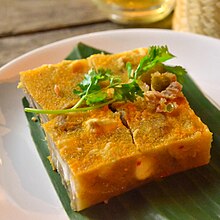
Aspic is a savory jelly typically made from meat stock that has been boiled long enough to release natural gelatin. Cooks have been using aspics as a means of preserving meats for centuries, but most modern recipes have their roots in French cuisine. The dish can be prepared as a mold, as a garnish, and as a glaze. It is notoriously challenging and sometimes smelly to work with, leading some cooks to avoid it — or at least simplify the cooking process by adding prepared gelatin.
How It's Made
The base of traditional aspic is meat. Though nearly any variety will work, beef, pork, poultry, and fish are the most common. Cooks often use scraps or pieces that would otherwise be considered waste, and cook them slowly to make a dense broth or consommé. The broth is strained and clarified with egg white until it is clear. Depending on the meat used, the broth may be supplemented with a commercial gelatin to complement the natural pectin present.

Ingredients

2 1/2 cups cold, good stock (fish, meat, chicken or vegetable)

·         3 tablespoons dry white wine
·         3 tablespoons dry sherry
·         2 tablespoons red wine vinegar
·         30 g gelatine
·         1/2 teaspoon salt
·         2 egg whites
·         Shells from the eggs, washed

Directions

1.     Put all the ingredients into a large, clean saucepan and whisk over low heat until the mixture forms a thick froth on the top and starts to come to the boil. Stop whisking immediately and let the mixture rise to the top of the saucepan, taking care not to let it boil over. As soon as it reaches the top, remove the saucepan from the heat and wait for the mixture to subside. Return the pan to the heat and allow the mixture to rise and subside once more in the same way. Repeat the process once more, then set aside for 5 minutes.
2.     Meanwhile, scald a large bowl, a sieve and a large piece of muslin or a clean tea towel with boiling water. Drain both bowl and sieve well and wring out the muslin or tea towel. Line the sieve with the piece of muslin, folded double, or the tea towel, and place it over the bowl. Taking care not to break up the froth, pour the aspic jelly carefully into the sieve and leave undisturbed to strain into the bowl. Do not press or squeeze. Cool the aspic and use immediately. Alternatively, it can be refrigerated for up to 24 hours.

Aspic Jelly in India

  • Agro Gums(100% EOU)
    636, G.I.D.C. Estate
    Phase - IV, Vatva
    Ahmedabad
     - 382445, Gujarat
    India
    ·         Tel:+91 79 25830659
    ·         Fax:+91 79 25891726

  • Internatioanl Flavors & Fragrances Inc.
    1-5, Seven Wells Street
    St. Thomas Mount
    Chennai
     - 600016, Tamil Nadu
    India
    ·         Tel:+91 44 22341131
    Fax:+91 44 22346017
  • Robin Chemicals Private Limited
    Plot No 27
    Southern Phase, Ambattur Industrial Estate
    Chennai
     - 600058, Tamil Nadu
    India
    Tel: +01 44 65698715


  • Saf Yeast Co. Pvt. Ltd.
    419, Swastik Chambers
    Umarshi Bappa Chowk, Chembur
    Mumbai
     - 400071, Maharashtra
    India

  • Barkat Frozen Foods (P) Ltd
    Gala No.105, Dhamji Shamji Industrial Estate
    Nr. Golden Palace Hotel, Kurla (W)
    Mumbai
     - 400070, Maharashtra
    India
    ·         Tel:+91 99 20775533
    ·         Fax:+91 22 25036752


Start a Charcoal Powder Making Business


Charcoal is a light black residue consisting of carbon, and any remaining ash, obtained by removing water and other volatile constituents from animal and vegetation substances.

Charcoal Powder
Charcoal Powder is obtained by grinding of the charcoal. It is widely used as a basic raw material in the manufacturing of agarbathi/incense sticks, Mosquito Coils, Charcoal Briquettes, pencils etc. Features: The Charcoal Powder is assured to be free from any kind of impurity Sizes: 100 meshes It is available in 40 Kg pp...


TYPES
Commercial charcoal is found in either lump, briquette, or extruded forms:
v  Lump charcoal is made directly from hardwood material and usually produces far less ash than briquettes.
v  Pillow Shaped Briquettes are made by compressing charcoal typically made from sawdust and other wood by-products, with a binder and other additives. The binder is usually starch. Some briquettes may also include brown coal (heat source), mineral carbon (heat source), borax, sodium nitrate (ignition aid), limestone (ash-whitening agent), raw sawdust (ignition aid), and other additives.
v  Hexagonal Sawdust Briquette Charcoal is made by compressing sawdust without binders or additives, making it completely natural. Hexagonal Sawdust Briquette Charcoal is the preferred charcoal in countries like Taiwan, Korea, Middle East, Greece. It has a round hole through the center, with a hexagonal intersection. Mainly for BBQ uses as it does not emit odor, no smoke, and little ash, high heat, and long burning hours (exceeding 4 hours). Just pure wood aroma for the BBQ meat.
v    Extruded charcoal is made by extruding either raw ground wood or carbonized wood into logs without the use of a binder. The heat and pressure of the extruding process hold the charcoal together. If the extrusion is made from raw wood material, the extruded logsare then subsequently carbonized.[10]
v  Japanese charcoal removes pyroligneous acid during the charcoal making. Therefore when burning, there are almost no stimulating smells or smoke. The charcoal of Japan is classified into three kinds.
·           White charcoal (Binchōtan) is very hard and has a metallic sound.
·           Black charcoal

Uses
Charcoal has been used since the earliest times for a range of purposes including art and medicine, but by far its most important use has been as a metallurgical fuel. Charcoal is the traditional fuel of a blacksmith's forge and other applications where an intense heat is wanted. Charcoal was also used historically as a source of carbon black by grinding it up. In this form charcoal was important to early chemists and was a constituent of formulas for mixtures such as gunpowder. Due to its high surface area charcoal can be used as a filter, as a catalyst or as an adsorbent.
v  Metallurgical fuel
v  Cooking fuel
v  Industrial fuel
v  Syngas production, automotive fuel
v  Gunpowder
v  Carbon source
v  Purification and filtrationi
v  Art
v  Horticulture
v  Smoking
v  Environmental implications 

Charcoal Powder Making Machine
Charcoal Powder Making Machine is used to make sawdust, sugar cane, rice straw, rice stalk, corn stalk, cotton stalk, bean husk and other agro-waste and forestry waste into half-charcoal stick. The product of this machine can be used to heat boiler, fireplace, etc for warm in house. The length of the finished product can be controlled by yourself, and we can also change it right for your requirement.

Working Principle of  Charcoal Powder Making Machine:
Briquette machine uses a large screw to grind, compress and extrude the biomass into briquettes. The natural lignin content in biomass is liberated with wood fiber under high pressure and temperature. In the briquetting process lignin serves as the glue and combines the particles of wood together, thus binding, compressing the biomass to form into various moulds of high density briquette, such as hexagonal, quadrangular, square,etc. As your requirement, we can also change the shape to order. And the diameters of briquettes are from 50-80 mm. Moreover non-binder needs to be used during this process.

Characteristics:
1. No binder or noxious chemical need to use.
2. The humidity of the raw materials is controlled in 8-12%.
3. Using the advanced Hot air drying system with the perfect performance.
4. After the processing of High temperature, purification, smoke removing, the carbonizing equipment transforms the semi-finished bio-fuel briquette into a smoke-free, tasteless, non-toxic cleaning carbon.
·         Material requirements:
Moisture: 8-12%, Size: 3mm ~ 5mm

Technical Data:

Model
Voltage/Hertz
Power (kw)
Capacity (kg/h)
Dimension (m)
Weight (kg)
Size of final products
GT-I
380V/50Hz
15+6
150-180
1.72x0.68x1.40
500
Diameter: 50mm
Inner diameter: 15-20mm
GT-II
380V/50Hz
11+6 gearbox
250-280
1.72x0.68x1.40
650
Diameter: 70mm
Inner diameter: 15-25mm
GT-III
380V/50Hz
22+9
300-350
1.95x0.96x1.50
870
Diameter: 80mm
Inner diameter: 15-25mm
GT-IV
380V/50Hz
22+9 gearbox
450-400
2.1x0.75x1.60
1180
Diameter: 70mm
Inner diameter: 15-25mm


"Indian Wholesale Charcoal Powder Suppliers"


We deal in all types of charcoal and charcoal powder.
Business Type : Wholesale Suppliers
Address : Thennampalayam ,Tup, Chennai, Tamil Nadu India


Wholesale suppliers of charcoal powder and cosmetic products.
Business Type : Wholesale Suppliers
Address : 350 Subramaniapuram Colony 2nd Street, sivakasi 626 189, Tamil Nadu India


We deal in coconut shell, charcoal powder, sawdust powder etc.
Business Type : Manufacturer / Exporters / Wholesale Suppliers
Address : Plot No 85,Road No 18,Antharasanahalli Industrial Area,2nd Phase, tumkur, Karnataka India


Wholesale suppliers of activated carbon, charcoal powder, coal dust, graphite powder, fine black powder, active carbon, coal.
Business Type : Manufacturer / Wholesale Suppliers / Exporters
Market Cover : Domestic Market
Address : 25 Laxminagar, Chandrapur, Maharashtra India


Today, charcoal is commonly produced from any number of materials including sawdust, bamboo, coconut shells, olive pits, pecan shells, besides hardwoods.


Powered by Blogger.