Showing posts with label airplane. Show all posts

With the X-59, NASA and Lockheed Martin want to do the seemingly impossible -- build a jet that flies faster than the speed of sound, without the explosive boom.


A render of the X-59 quiet supersonic airplane flying above the desert.

The X-59 quiet supersonic airplane.

NASA/Lockheed Martin

In a windowless hangar in the California high desert, the final touches are coming together on an aircraft that could reshape aviation. A needle-nosed airplane that looks more like a futuristic sketch from a 1950s sci-fi comic -- all sweeping lines and unbroken curves, a narrow cockpit concealed in the center. Designed and built by NASA and Lockheed Martin, this is the supersonic airplane of the future. And when it takes to the skies, NASA and Lockheed are hoping you won't even notice it flying by.


I'm at the Armstrong Flight Research Center, just outside of Lancaster, California, to see the X-59 QueSST (short for Quiet SuperSonic Technology) -- a demonstrator aircraft designed to fly faster than the speed of sound without generating an explosive sonic boom. 

A traditional supersonic aircraft can create a sonic boom in excess of 100 decibels when it flies, a sharp sound louder than a fireworks display. It was this disruptive sound that led the Federal Aviation Administration to ban commercial supersonic flight over land in 1973. 

But the X-59 has been shaped to minimize the shock waves that cause a sonic boom midflight, reducing its sound at ground level to 75 decibels. According to NASA, that's about as loud as a car door slamming down the street. 


To design this "low-boom" aircraft, NASA and Lockheed Martin returned to the basic principles of aerodynamics. The result is an airplane that is both incredibly advanced and elegantly simple. 

"Those principles of physics, of aerodynamics, have been around since the beginning of time," says Lockheed Martin's X-59 program director, David Richardson. "This is what Mother Nature wants to see. Just like birds are perfectly designed, this airplane is being perfectly designed to fly supersonic as quiet as it can."

When the X-59 takes to the skies, the goal is to generate a "sonic thump" and by doing so, convince regulators like the FAA that a ban on supersonic passenger travel over land can be overturned. 

That change could open the door to a future where supersonic travel is no longer just for fighter pilots. If NASA's X-59 QueSST program succeeds, flying faster than the speed of sound may be possible again for the first time since the Concorde was retired in 2003.

The science of sound

To understand how a sonic boom works, you need to know a little something about the basic physics of sound. 

Sound is essentially a wave of compressed air -- imagine it like a pulse in a slinky, moving from point A to point B at a speed of roughly 340 meters per second. When a plane flies through the air, it pushes air out in front of it, creating those compression waves. 

But when a plane flies at supersonic speeds (above Mach 1), it's traveling faster than those waves of compressed air can move out of the way. As a result, the plane generates shock waves that travel down to the ground where they are perceived as a sonic boom. 

A diagram showing shockwaves propagating down from supersonic aircraft

When a plane flies, it pushes waves of compressed air out in all directions. When it flies at supersonic speeds (faster than the speed of sound), those waves coalesce and produce a shock wave that is heard on the ground as a sonic boom. 

Any big variation in shape on the body of the plane, like the cockpit jutting up at the front or the tail sticking up at the back of the plane, can produce a shockwave. To minimize the shockwaves that travel down to the ground, you need to change the shape of the plane and make it far more streamlined, smoothing out the variations in shape and spreading them out across a much longer body. 

That's what NASA and Lockheed have done with the X-59. The plane is 99 feet, 7 inches long, but only carries one passenger; at over 30 feet long, the nose takes up roughly one-third of the plane and leads seamlessly to the swept-back wings and a single engine at the rear. 

A mock-up of the X-59 aircraft taking off

Enlarge Image

A mock-up showing the X-59 taking off.

NASA/Lockheed Martin

According to Larry Cliatt, NASA's acoustic testing technical lead for the X-59, all those features combine to make sure the shockwaves being produced midair are "well behaved."

"We want to keep [the shock waves] parallel and separated from each other so they don't combine into a loud sonic boom," says Cliatt. "So we're dragging out those volume changes, making them very gradual across the entire body of the airplane."

A new way of flying

The X-59 is so long and streamlined that its cockpit has no forward-facing window.

Instead, the pilot uses an External Vision System created by NASA to fly the plane. The XVS uses two cameras above and below the aircraft to create a real-time view of the front of the plane shown on an HD screen. But the XVS also acts as a head-up display, or HUD, showing data such as altitude, airspeed and flight path. 

x-59-xvs-simulator-nils

NASA test pilot Nils Larson in the X-59 flight simulator, using the same External Vision System that will be used in the final X-59 aircraft.

At Armstrong, NASA is testing that XVS in its X-59 flight simulator. NASA test pilot Nils Larson will be one of the pilots who eventually flies the X-59 using the XVS -- he's here to show me how the system works. 

Larson has spent the morning doing a routine test flight in one of NASA's F-15s. Now he's back in the air conditioning from the 114-degree heat outside, where he was putting the flight sim through its paces. For Larson, the experience of flying with a cockpit window and using the XVS display isn't all that different. 

The benefit comes with combining the real-world view from the cameras with the kind of data you see on a monochromatic head-up display in a fighter jet. The XVS lets pilots see flashing warnings or colored text over the horizon, things they wouldn't ordinarily see through a cockpit window. 

"You use it just like you would any other window," says Larson. "But because it's a display, it actually gives us more capability than you might have if it was just a window."

The sonic thump

The real test of NASA and Lockheed Martin's efforts will come when the X-59 begins testing. In 2022, Lockheed will conduct initial flight tests to make sure everything is working as expected and the plane is flying with the right speed and altitude. Then Lockheed hands the keys over to NASA, which will begin "acoustic validation" testing in 2023 to ensure the sonic boom has been satisfactorily scaled back to a sonic thump.

This second stage of testing will involve sending the X-59 up with an F-15 fighter jet that will act as a chase plane, measuring the shockwaves being produced by the aircraft midflight. And perhaps most impressive of all, NASA will capture images of the shockwaves -- a process that's known as schlieren photography. 

Photographing a plane moving faster than the speed of sound is no easy feat.

"The X-59 has to eclipse the sun because we use the sun as a backdrop," says Cliatt, theacoustic testing lead. "All of that has to happen perfectly. It's like threading a needle to get that gorgeous image."

Schlieren imagery showing the shockwaves coming off two T-38 fighter jets midflight.

Schlieren images like this one can capture the shockwaves coming off supersonic aircraft midflight. 

NASA

But the big decider will be the sound on the ground. In the acoustic testing phase, NASA will set up an array of microphones across a 30-mile-long stretch of the Mojave Desert in California to measure the sonic thump and make sure it's as quiet as intended. 

Then comes the third stage of testing in 2024 when the X-59 will be flown over a handful of cities and towns across the United States to gauge the community response. 

At the end of all these rounds of testing, NASA will submit its data to regulators with the goal of changing the restrictions around supersonic flight.  

After all, back in the '70s when the Concorde started flying and the FAA introduced its ban on commercial supersonic flight over land, noise was the problem. But if NASA can prove that supersonic planes can fly without the boom, it could open up a whole new world of aviation.

The X-59 could pave the way for private companies and airlines to reintroduce supersonic flights to everyday passengers, all across the world. According to Lockheed Martin's David Richardson, flights for the general public could come as soon as 2035. And they'll be a game changer.

"You don't just see this demand from high-end consumers, you see this from everybody -- everybody would like to 'get there' faster," he says. 

A view from inside the X-59 aircraft at Lockheed Martin

Enlarge Image

Getting up close to the build of the X-59 at Lockheed Martin's Skunk Works.

The blink of an eye 

In the hangar at Lockheed Martin Skunk Works, I get a sense of the scale of the X-59 build as it goes through the final stages. The aircraft feels more like a giant dart than a plane, with those swept-back wings and the nose that stretches out for yards and yards. 

Richardson, who has hitherto worked on highly-classified projects for Lockheed, is delighted to show me around. He takes us up around the scaffolding at the top of the plane to point out the electronics being installed by the engineering crew. He hands me a hard hat and takes me underneath the body of the plane to show the sensors that will feed data back to the XVS. He lets me pop up in the cavity where the landing gear will go and gaze out through the skeleton of the plane, looking out where the engine will eventually be.

The build is getting close to completion and the team is gearing up for the first flight. 

For NASA's Larry Cliatt, it's been a long road to get this far. Years of designing, testing and building that will all lead to one moment of truth during that first test flight. 

"We're going to have a lot of people staring at data, waiting to see the very first sonic thump from the X-59 to make sure all of our work has paid off," says Cliatt. "You know, it's going to happen in the blink of an eye. A sonic boom is 200 milliseconds long. And that's what all of this is about -- 200 milliseconds."


Rocket aerodynamics is the study of how air flows over a rocket and how this affects drag and stability.

The nose cone and fins of a rocket are designed to minimise drag (air resistance) and to provide stability and control (keep it pointing in the right direction without wobbling).

Nose cone and rocket diameter affect drag

The amount of air resistance that opposes a rocket’s motion depends mainly on the shape of the nose cone, the diameter of the rocket and the speed of the rocket.

The first point that meets the air is the nose cone at the front end of the rocket. If the speed of a rocket is less than the speed of sound (1,200 km/h in air at sea level), the best shape of a nose cone is a rounded curve. At supersonic speeds (faster than the speed of sound), the best shape is a narrower and sharper point.

Rockets with a larger diameter have more drag because there is more air being pushed out of the way. Drag depends on the cross-sectional area of the object pushing through the air. Making a rocket as narrow as possible is the best way to reduce drag.

The speed of a rocket through the air similarly increases drag. As speed doubles, drag increases four times as much.

https://youtu.be/oAh4_bDFHls

Fins control direction and stability

The stability of a rocket is its ability to keep flying through the air pointing in the right direction without wobbling or tumbling.

Fins are used on smaller rockets to provide this stability and control direction. It works in the same way as placing feathers at the tail of an arrow. The greater drag on the feathers keeps the tail of the arrow at the back so that the point of the arrow travels straight into the wind.

To understand how to place fins and how large to make them, it is important to understand about centre of mass and centre of pressure.

Centre of mass

The centre of mass of an object is the point at which all of the mass of an object can be thought to be concentrated.

To find the centre of mass of a rigid object such as a water bottle rocket, balance the rocket on your finger so that the rocket is horizontal. The centre of mass is a point directly above your finger.

The centre of mass can be moved closer to the nose cone end of a rocket by adding some mass near the nose cone. This will increase stability.

Centre of pressure

The single point at which all of the aerodynamic forces are concentrated is called the centre of pressure.

To find the approximate position of the centre of pressure, draw an outline of the rocket on a piece of paper. The centre of the area of the outline shape is approximately the centre of pressure.

Centre of pressure

This stable model rocket shows the centre of gravity (cg) (also known as the centre of mass) closer to the front end of the rocket than the centre of pressure (cp).

For a rocket to be stable, the centre of pressure needs to be closer to the tail end than the centre of mass. If the centre of pressure is at the same position as the centre of mass, the rocket will tumble. Stability increases as the distance between the centre of mass and the centre of pressure increases.

https://youtu.be/oAh4_bDFHls

Placing fins at the tail end of a rocket moves the centre of pressure closer towards the tail end and increases stability. However, this also increases drag, so there is an optimal size for fins so that the rocket has enough stability without having too much drag.


For a plane or bird to fly, its wings must produce enough lift to equal its weight. Most wings used in flight are a special shape – called aerofoils (or airfoils). This shape is needed to help generate lift.


The explanation for lift has been traditionally attributed to a Swiss mathematician named Daniel Bernoulli (pronounced Ber-noo-lee). However, recently, many scientists have debated whether the use of the Bernoulli principle to explain how wings work is, in fact, correct.

Many feel that using the Bernoulli principle, commonly taught in schools, is either incorrect or should not be used as a single explanation for lift. This is an interesting example of how science ideas are constantly being challenged. Many people now argue that angle of attack, based on Newton’s third law of motion, is a more effective explanation for lift.

It appears there are actually a number of explanations for lift that include the angle of attack and the Bernoulli principle and that these explanations work together to explain how lift is produced.

The angle of attack – Newton’s third law

Newton’s third law of motion states that, for every action, there is an equal and opposite reaction. Based on this law, wings are forced upwards because they are tilted, pushing air downwards so the wings get pushed upwards. This is the angle of attack or the angle at which the wing meets the airflow.

As air flows over the surface of a wing, it sticks slightly to the surface it is flowing past and follows the shape. If the wing is angled correctly, the air is deflected downwards.

The action of the wing on the air is to force the air downwards while the reaction is the air pushing the wing upwards. A wing’s trailing edge must be sharp, and it must be aimed diagonally downwards to create lift. Both the upper and lower surfaces of the wing act to deflect the air.

The amount of lift depends on the speed of the air around the wing and the density of the air. To produce more lift, the object must speed up and/or increase the angle of attack of the wing (by pushing the aircraft’s tail downwards).

Speeding up means the wings force more air downwards so lift is increased. Increasing the angle of attack means the air flowing over the top is turned downwards even more and the air meeting the lower surface is also deflected downwards more, increasing lift.


There is a limit to how large the angle of attack may be. If it is too great, the flow of air over the top of the wing will no longer be smooth and the lift suddenly decreases.

Birds and planes change their angle of attack as they slow to land. Their angle of attack is increased to ensure their lift continues to support their weight as they slow down. Wings and tails need to be movable so that their shapes can be changed to control their flight.

The Bernoulli principle

To understand this principle, we need to understand air pressure. Air is composed of several invisible gases that have mass. This mass is made up of molecules, moving in rapid random motion, and exerts a force called air pressure. We are unaware of this pressure because it is evenly pressing all around us. If the air pressure is not even, the greater pressure pushes an object in the direction of the weaker (or lower) pressure.

In 1738, Bernoulli found that, when a gas (like air) moves, it exerts less pressure. According to Bernoulli’s principle, the faster air moves, the less air pressure it exerts (this is not the same as the force exerted by a wind), because the molecules in the air become more spread out.

Normally, air moves along smoothly in streams, but airflow is disturbed when a wing moves through it, and the air divides and flows around the wing. The top surface of the wing is curved (aerofoil shape). The air moving across the top of the wing goes faster than the air travelling under the bottom. Because it’s moving faster, the air on top of the wing has less air pressure on the wing than the air below the wing. In other words, air below the wing pushes on the wing more than air above the wing.


The Bernoulli Principle

When the air splits to go around the wing, the air that is forced over the wing travels farther and the distance between the air molecules increases, making the air above the wing less dense, or lower pressure. The pressure difference between higher pressure air below the wing and lower pressure air above the wing causes lift.

This difference in pressure combines with the lift from the angle of attack to give even more lift.

It used to be claimed that the air travelling over the top of the wing took the same time to reach the back of the wing as the air travelling along the bottom. This has been shown to be incorrect, but it has been shown that the speed of the air over the top is faster than the speed of the air under the bottom.

The shape of the aerofoil is different for different aircraft. It is designed to give the best trade-off between lift and drag for each aircraft. On many aeroplanes, the bottom of the wing will curve downwards slightly instead of being flat. On other aircraft, such as gliders, it will curve upwards. On a stunt plane, which is just as likely to fly upside down as it is to fly the right way up, the curve on the bottom of the wing will be the same as it is on the top.

Airplane (Product Category),airplane flying,rolling,yawing,fligh navigation,the first flight,Wright Flyer,Cockpit controls,Flap,Slat,Aileron,Rudder,Flying,airfoil,wing working,lift,jet engine

,airplane,reverse thrust,flight controls,take off,landing,airfoil


Commercial planes are generally white because of these reasons: white color provides a thermal advantage, it helps in easier inspection of cracks and dents on the fuselage and is also cost-effective. White planes also tend to have a higher resale value than colored ones.
While gazing at an airplane passing thousands of feet overhead, or when you are just about to board a flight at the airport, have you ever noticed that the vast majority of airplanes are white? Sure, some have stripes, decorations, and names in different colors, but the base color behind those add-ons is almost always white. It seems a bit strange, but is there a real reason for it?

Thermal Advantage

The color white is a terrific reflector of sunlight, and reflects almost all the light that falls on it, unlike other colors, which absorb some of the light.

If you paint your airplane in a color other than white, it will absorb sunlight and heat up the body of the airplane, which is something you want to avoid. White, on the other hand, reflects that sunlight and avoids the gradual build-up of heat on the plane. This is a good thing, not only when the airplane is in flight, but also when it’s parked on the runway, because it takes less time to cool down down after sitting on the ground in a hot, sunny environment. In fact, some planes actually ‘need’ to have a coating of white paint in order to guarantee a structurally sound flying machine.

Easier inspection of cracks and dents on the fuselage

Airplanes are regularly inspected for cracks, dents, and any other form of surface damage (for obvious safety reasons). Nothing works better than white when it comes to spotting a crack on the surface, as the crack is almost always darker than white.
Additionally, white also accentuates corrosion marks and oil leak spots (as they leave dark-colored trail). Plus, a white plane is easier to spot (visually) in the event of a crash or any other mishap, especially at night, or in a massive body of water.

Less ‘Scientific’ Factors

Not every reason behind the this obsession with white planes is ‘scientific’, so to speak. There are a few other reasons too, which can’t be ignored.

Painting is Expensive!

In pecuniary terms, painting an airplane is not like painting a fence. It requires a considerable investment, both in terms of money, manpower, and time. Painting a regular Boeing Airbus takes anywhere between two and seven days, depending on your budget. Plus, more paint on the fuselage means more overall weight (you didn’t think that massive amount of paint was weightless, did you?), which effectively translates to higher operating costs. As an airline company, you would want to avoid that as much as possible.
Colored airplanes have lower resale value
Now, if you have a colored airplane (parked in your own private hangar) and you want to sell it, you should expect to make a little less than if it was a white airplane.
You see, the end goal of an airline company is to minimize the cost as much as possible. Buying a colored airplane would mean that they would likely have to paint it white, for the various reasons mentioned above. Hence, it makes perfect sense that the company would pay you a lower price for your fancy, colored airplane.

White doesn’t fade

When flying at high altitudes, completely exposed to various atmospheric conditions, colored airplanes tend to fade, and thus require a lot of paint jobs to maintain their aesthetic appeal. A white-colored airplane, on the other hand, doesn’t appear significantly different, even after spending a considerable amount of time in the air.

If it ain’t broke, don’t fix it!

Finally, if there’s no problem with the existing white color, then why bother fixing it at all? As we’ve clearly shown, the white color does have its benefits – both scientific and economical.

Whether you get on a plane once a year or once a week, there are probably still a few things you don’t know about flying.

Here are a few secrets you never know about taking to the skies, according to flight attendants, pilots, and industry experts.
The chimes you hear during a flight are actually a secret code.
Notably, they’re not usually conveying anything too exciting.
According to a blog post by Qantas Airlines, flight crews usually use a system of chimes and bells to communicate across the cabin.
These chime messages could be about anything from the number of remaining snacks to turbulence detected on the flight path.
On rarer occasions, the chimes could be a signal from the cockpit conveying an emergency or change of route.
Airplane lavatories can unlock from the outside.
You can actually unlock the lavatory from the outside via an external lock mechanism, which is usually hidden beneath the “no smoking” sign on the door, according to LifeHacker.
Though it might seem invasive, the lavatories unlock from the outside for safety reasons.
You may not want to drink the water on a plane.
Even if you’re not a germaphobe, you might want to think twice about ordering tea or coffee on a plane.
According to testing conducted by the Environmental Protection Agency in 2004 and 2012, the drinking water on more than one out of every 10 planes tested positive for “high” levels of coliform, which are potentially harmful bacteria found in human feces.
Though coliform by itself is not a serious hazard, it usually signals the presence of other dangerous microorganisms like E. coli.
While the EPA now requires planes to have their water supply tested once a year, most flight attendants will tell you to avoid the onboard water supply at all costs.
Generally, dimming the lights is meant to prepare your eyes for a potential evacuation.
No, the crew isn’t trying to lull you to sleep when they dim the lights for takeoff. Turning down the interior lights is actually done so that passengers’ eyes are already adjusted to the darkness, just in case something goes wrong during takeoff or landing, according to Conde Nast Traveler.
Flight attendants don’t get paid until the plane doors close.
Flight attendants who earn an hourly wage don’t actually start getting paid until the aircraft doors close.
Similarly, they stop getting paid after the doors open, according to The Points Guy.
That’s right – all that time flight attendants spend getting the plane ready, boarding passengers, doing safety inspections, and getting everyone off the plane is unpaid.
Many European airlines use a salary system for compensating their flight attendants, and most crew members on both sides of the pond receive a tax-free allowance to help them cover expenses like food during their layovers.
That emergency oxygen mask only lasts about 15 minutes.
In what probably sounds like a terrifying revelation, the drop-down emergency oxygen masks on the plane are usually only equipped to pump out oxygen for about 12 to 15 minutes, according to HuffPost.
But don’t freak out. It normally takes a pilot far less time to drop the plane to a safe altitude than it does for those masks to run dry of oxygen.
The important thing is to get your mask on over your nose and mouth as soon as you can, as you risk passing out just 30 seconds after cabin pressure drops to unsafe levels.
A plane captain has some serious authority.
Federal regulations give the PIC, or “pilot in command,” a lot of authority while the plane doors are closed, according to Think Aviation.
A PIC can put a passenger in restraints, take a will, write fines, and refuse entry to a passenger who looks sick. A PIC is the ultimate authority on an airplane – what they say goes.
Your boarding pass has a lot of hidden information.
Much of the text on your boarding pass probably doesn’t make a lot of sense to you at first glance, but it actually includes a wealth of interesting – and potentially sensitive – information.
The first two letters before the flight number refer to the airline. The numerical portion of your flight number is actually a clue as to what direction you’ll be flying in — odd-numbered flights fly south while even numbers fly west, according to Gizmodo.
Meanwhile, the six-character segment of text on your boarding pass is your booking reference or passenger name record. This little code actually can be used online to look up everything from your destination to your age and credit card information.
The tray tables are oftentimes the dirtiest things on an airplane.
The tray table at your plane seat is probably one of the dirtiest things on your flight. They’re only cleaned “about once a day, usually when the aircraft RONs (remains overnight,” active flight attendant Sara Keagle told HuffPost.
Flight attendants recommend bringing sanitizing wipes with you to wipe down your space, as passengers do everything from drool to change dirty diapers on those tables.  
 
 
Your flight attendant could probably deliver your baby.
Flight attendants aren’t just waiters in the sky – they have some serious credentials. Training to be a flight attendant involves a host of technical and safety know-how.  
As flight attendant Carrie A. Trey told The Points Guy, “practical tests can include learning how to put out fires via simulators, diagnosing various conditions, splinting broken limbs, stopping nosebleeds, administering CPR, and yes, even baby delivery.”


While not everyone will have pondered the subject while staring out of the window during a flight, the question as to why aeroplane windows have rounded edges, unlike the hard corner in your home is interesting. 
Stocksy_txp662b2624LUi000_Small_495965
Over the years, aerospace engineering has made huge leaps in aeroplane technology, meaning planes can carry more passengers and go faster. The planes have also changed shape to increase safety – including the windows. As commercial air travel took off in the mid-20th century, airline companies began to fly at higher altitudes to save money—the air density is lower up there, creating less drag for airplanes. However, higher altitudes came with problems, like the fact human beings can’t really survive at 30,000 feet. To make that possible, the cabin was changed to a cylindrical shape to support the internal pressure. But at first, plane builders left in the standard square windows and this expansion meant catastrophe.
window
The de Havilland Comet came into fashion in the 1950s. With a pressurised cabin, it was able to go higher and faster than other aircraft. However, the plane had square windows and in 1953 three planes fell apart in the air, killing 43 people in total. The reason for the crashes? The windows. Where there’s a corner, there’s a weak spot. Windows, having four corners, have four potential weak spots, making them likely to crash under stress – such as air pressure. By curving the window, the stress that would eventually crack the window corner is distributed and the likelihood of it breaking is reduced. Circular shapes are also stronger and resist deformation, and can thus survive the extreme differences in pressure between the inside and outside of the aircraft.
de-Havilland-Comet-1-showing-square-windows
Fortunately, designers figured out the design flaw pretty quick. Now we have nice, rounded airplane windows that can withstand the pressure of cruising altitude. Gives being able to gaze out of your window to the world from 35,000 feet a whole new outlook, doesn’t it?


“We were once told that the aeroplane had ‘abolished frontiers’; actually it is only since the aeroplane became a serious weapon that frontiers have become definitely impassable” – George Orwell wrote (1945).
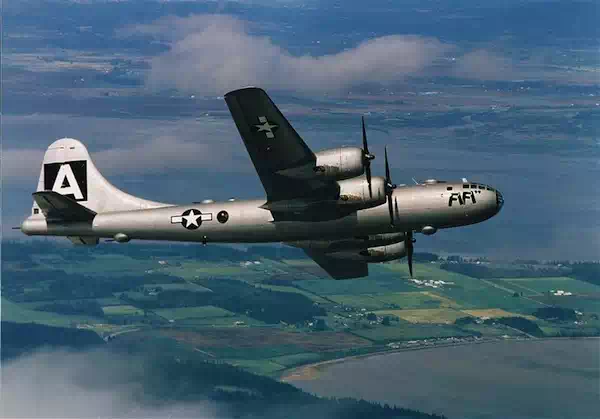
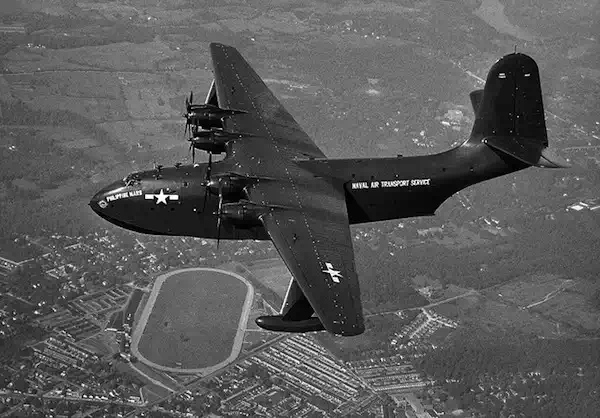
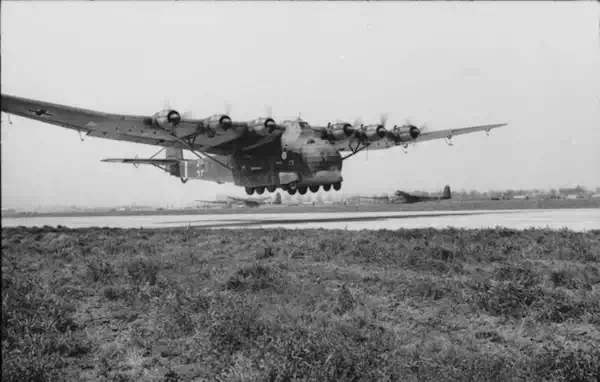
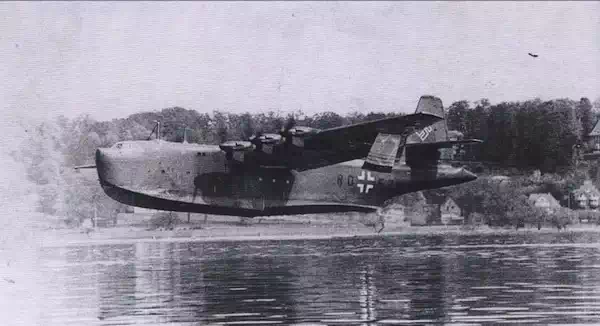
The aircraft on this list are amongst the biggest and most spectacular ever built. These 10 giant military planes are incredible feats of engineering, and their impact on people’s lives cannot be underestimated. This topic includes such classic airplanes as World War Two’s Boeing B-29 Superfortress, the monstrous Cold War-era Boeing B-52 Stratofortress, and massive transport plane the Convair XC-99. But see for yourself.


10.  Martin JRM Mars
10 Martin JRM Mars


9. Messerschmitt ME 323
Flugzeug Me 323 Gigant


8. Blohm & Voss BV 238
8 Blohm & Voss BV 238


7. Boeing B-29 Superfortress
B-29


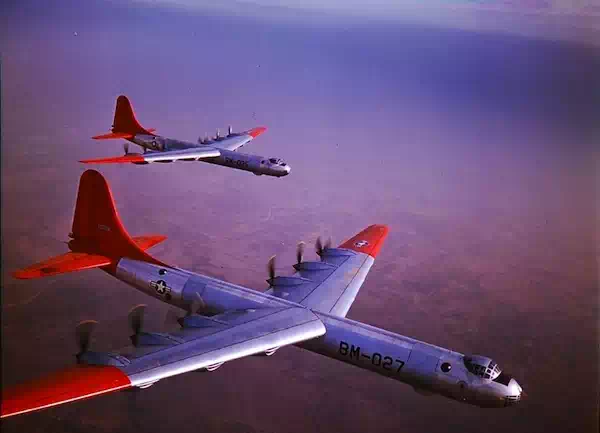
6. Convair B-36 Peacemaker
6 Convair B-36 Peacemaker


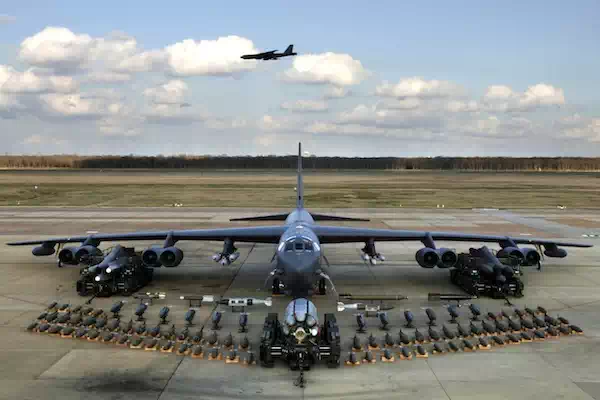
 5. Boeing B-52 Stratofortress
Display of might


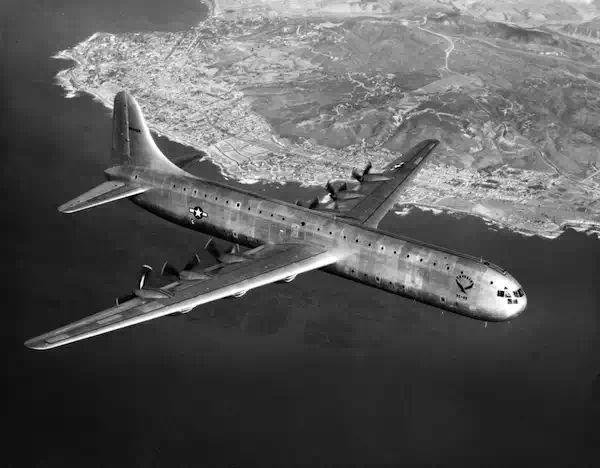
4. Convair XC-99
4 Convair XC-99


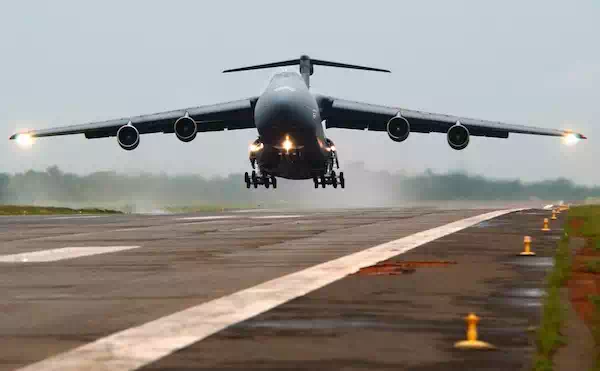
 3. Lockheed C-5 Galaxy
Liberian Support Operation


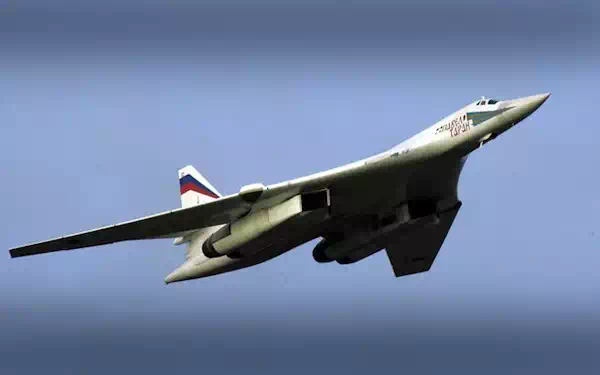
 2. Tupolev Tu-160
2 Tupolev Tu-160


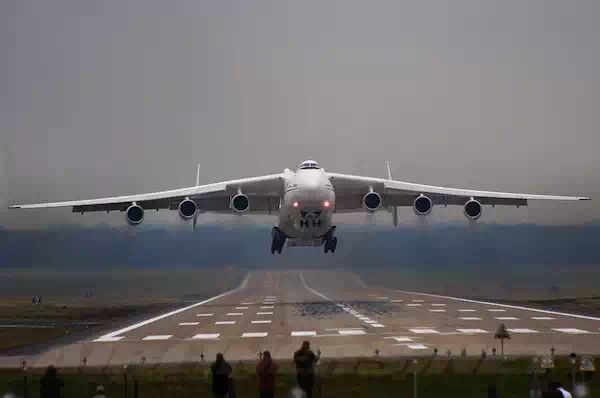
1. Antonov An-225 Mriya
1 Antonov An-225 Mriya


Powered by Blogger.