Showing posts with label new tech. Show all posts

ELON MUSK SAYS SPACEX WILL “PROBABLY” LAND HUMANS ON THE MOON BY 2024,


BUT THEY WILL HAVE TO OVERCOME A FEW HURDLES FIRST.

NASA

Rather than later, sooner is preferable.

Elon Musk, the founder of SpaceX, has hinted that Starship will be ready to land astronauts on the Moon before the estimated launch date of 2024.

Musk was responding to a tweet from a Tesla CEO on Saturday asking if the super heavy-lift launch vehicle will be ready to transport astronauts to the lunar surface by 2024, to which he replied, "Probably sooner."

Is he correct?

Of course, this may just be more of the typical Elon bravado we've all grown to despise and adore — especially given SpaceX's track record of missing mission and launch dates.

There's also the reality that Artemis will be a particularly difficult mission, requiring anywhere from eight to sixteen launches to prepare for a single voyage to the Moon. A lunar landing in 2024, according to NASA's own inspector general, is "not viable" due to delays in spacesuit development.

However, there are evidence that things are heading in the right direction. For one thing, SpaceX recently affixed Starship to the Super Heavy launcher, making it the world's largest rocket. They're simply waiting for the FAA to complete an environmental evaluation before attempting their first orbital test launch. As a result, there's a strong probability Starship will enter orbit in the fall.

In addition, according to Fox Business, NASA just made a $300 million payment to SpaceX for the planned $3 billion project. So, at the very least, the EPA is still confident in Musk's company's ability to complete the task.

In any case, it's best to treat planned launch dates for large, complex missions like Artemis with caution. The objective will be completed eventually — and even if you want to dunk on Blue Origin, it's best not to rush things (looking at you, Elon).


This article is originally published in - futurism


WE HAVE NO IDEA HOW MANY BATTERIES ARE REALLY RECYCLED.

Batteries Can Be Recycled

Tesla claims in its 2020 Impact Report that it can now recycle up to 92 percent of the raw materials used in its battery cells, a method that the company's facilities have already started to apply.

The procedure could have a significant impact on the environmental cost of producing electric vehicle battery packs. Not only is the process energy-intensive, but Tesla's current battery lineup also requires cobalt, a rare element linked to controversial mining practises in the Democratic Republic of Congo, Zambia, and elsewhere.

Long-term planning

Tesla, for example, did not provide any particular numbers on how many battery packs it recycled last year.

Tesla battery packs recycled 1,300 tonnes of nickel, 400 tonnes of copper, and 80 tonnes of cobalt in 2020, according to the company's calculations.

According to the study, “a Tesla battery pack is meant to outlast the vehicle itself.” “As a result, just a handful customer Tesla batteries have been retired to date, including those from our nearly nine-year-old Model S cars.”

According to InsideEVs, Tesla has been working with third-parties on the process for more than two years, but has remained tight-lipped about any details.

The study states, "The modest number of post-consumer batteries that we acquire are mostly generated from our fleet of on-the-road cars, predominantly taxi-like vehicles."

Because the Model S has only been in production for nine years, it will “likely be some time before we start getting back batteries in bigger volumes,” according to the business.

Tesla is keen on creating its own nickel, cobalt, and copper from recovered batteries, thus it makes sense for the company to invest in improving its recycling procedures.

Fortunately, this could also be beneficial to the environment.


This article is originally published in - futurism


 An MRI machine uses a combination of magnetic fields and radio waves to look at the hydrogen atoms in our bodies. The magnetic field causes the hydrogen atoms to act like small magnets and then radio waves are sent in, which bounce back, giving us a signal we can measure.

In MRI we’re really looking at hydrogen atoms in the body, and fortunately we have a lot of hydrogen atoms in our body, we’re made up of a lot of water and the way MRI works is with a combination of magnetic fields and sending in radio waves. So this is kind of different from x-ray imaging where you’re using very high energy x-rays, radio waves are much less damaging. We call them non-ionising radiation. These radio waves, the photons don’t have enough energy to cause any chemical changes, so that’s why we believe that MRI is completely safe. The MRI scan uses the magnetic field to align these hydrogen atoms so instead of them being just in a random arrangement, the magnetic field tries to pull them into alignment like a whole set of compass needles.


So what we do then is to send some energy into the body, and this is at radio frequencies, and then we listen for radio waves that are being emitted from these hydrogen atoms and that’s the signal that we measure, and by changing the magnetic field we can determine where the signal came from.

A very good analogy for MRI is with a gyroscope. It rotates about its axis and it rotates at a particular frequency. And the same is true of a hydrogen nucleus, the proton at the centre of a hydrogen atom, when you put that into a magnetic field it’ll tend to rotate, and that rotation speed, the frequency, depends on the magnetic field strength. So by changing the magnetic field strengths, we can make the hydrogen nuclei rotate at different frequencies, and we can measure those frequencies and determine where the hydrogen nucleus is.

Why does an MRI cost so much?


The main cost of the MRI scanner is in generating this very large, very uniform magnetic field. And the way that we do that is using super conducting wires. So super conducting materials have this unique property that they have no electrical resistance. It’s not nearly nothing, it’s absolutely nothing. So once you start a current flowing through these coils that current will continue to flow essentially forever. So the main cost of the MRI scanner is this coil of wire, and to keep that coil of wire super-conducting, to keep it with zero resistance we have to keep it very cold. And we keep it cold using liquid helium. Liquid helium is four degrees above absolute zero, absolute zero is minus 273 degrees celcius. And when you look at the MRI scanner itself, what you’re looking at is a big tub that contains several thousand litres of liquid helium.


The company's new spinoff brand's first electric motorcycle.

The LiveWire One, Harley-latest Davidson's battery-powered vehicle, is reviving the company's effort into electric motorcycles. While the new bike will have similar specifications to the company's initial LiveWire motorcycle, it will be more affordably priced in order to attract more customers.

The LiveWire One will be priced at $21,999 before any federal, state, or local tax incentives are applied. (Any electric motorcycle capable of travelling at least 45 miles per hour is eligible for a federal tax credit of up to $2,500.) When these credits are factored in, Harley-Davidson claims that the price will fall below $20,000 for the majority of consumers.


HARLEY-DAVIDSON SAID THE PRICE WILL ACTUALLY FALL BELOW $20,000 FOR MOST CUSTOMERS

Customers in only three states will be able to purchase the LiveWire One at first: California, New York, and Texas. The business is embracing a "hybrid" approach to retail, allowing customers to complete the majority of their buying online before picking up their bike at a local Harley-Davidson dealership. The LiveWire One will be sold by 12 dealerships at first, but the business expects that number to rise next year.

The LiveWire One will be able to travel 146 city miles on a single charge, according to Harley-Davidson, although it is unclear how that would translate on the highway. (This is presumably due to the fact that the range decreases as you speed up.) Even so, it's only a smidgeon.

There are a few additional significant variations, albeit Harley-Davidson did not provide a spec sheet at the time of publication. The LiveWire One's battery will charge from 0 to 100% in 60 minutes or 0 to 80% in 45 minutes when plugged into a DC fast charger. This new bike will incorporate a six-axis IMU (inertial measuring unit) for traction control and anti-lock braking, similar to the original LiveWire.

In an interview, Harley-Davidson CEO Jochen Zeitz noted, "It's a very different riding experience." “It's exhilarating because it's such a quick and nimble motorcycle... you can go from 0 to 100 [mph] in no time.”


A comparison of the two LiveWire motorcycles, as well as other electric two-wheelers, will show more about the new brand's ability to attract new customers. We'll have to wait until July 18th, when Harley-Davidson plans to reveal the LiveWire One at the Northern California International Motorcycle Show. If you can't wait that long, you can place an order at LiveWire.com.

While the first LiveWire was commended for being well-made and enjoyable to ride, it was frequently chastised for being too expensive, with a starting price of $29,799. Within the company's lineup, there was also an apparent dearth of options. If you truly desired to purchase an electric vehicle,

It put Harley-Davidson at a disadvantage in the developing electric motorbike market, where businesses like Zero Motorcycles are selling a variety of models for $10,000 to $16,000.

However, whereas the initial LiveWire was intended to show what Harley-Davidson could achieve with an electric motor, the LiveWire One is intended to be a more serious attempt to acquire those city-dwelling customers that the firm sees as critical to its long-term survival. The question is if this market niche exists at all.

“This is not a product sold through a regular dealer network,” Zeitz explained. “It's a new brand,” says the narrator. It's a different way of approaching the market.”

Zeitz disputed the notion that the company's main customers, the ageing "boomers," were a problem unique to Harley-Davidson. “Isn't it true that the world's population is ageing?” he joked. “So this isn't just a Harley issue.”

“IT’S A NEW BRAND. IT’S A NEW GO-TO-MARKET APPROACH.”

However, he admitted that the idea with LiveWire is to appeal to a new generation of moviegoers who didn't grow up seeing classics like Easy Rider. “Every brand needs to innovate... and excite the next generation about your product and the experience you deliver,” Zeitz said, citing the 2020 television series Long Way Up as an example of the appeal of electric motorcycles, in which actor Ewan McGregor and TV presenter Charley Boorman ride LiveWires from Argentina to Los Angeles.

With the LiveWire One, the company is recommitting itself to the electrification of an entire product line. Earlier this year, Harley-Davidson decided to spin off LiveWire into its own brand, with the goal of launching multiple electric motorcycles under that nameplate. LiveWire One is the first product of that effort, and there will be more to come.

The company telegraphed this move in its Hardwire strategic plan to reinvigorate its flagging sales over the next five years. This dedicated division would be “focused exclusively on leading the future of electric motorcycles,” the company said in its plan.

But while LiveWire will certainly play a significant role in Harley-Davidson’s future, the company is not planning to phase out gas-powered vehicles anytime soon. That’s not the case in the auto industry, with giants like Ford, General Motors, Volkswagen, Honda, Volvo, and others promising to go EV-only within the next decade. Meanwhile, California has said it would ban the sale of gas-powered vehicles by 2035. Other states are sure to follow.

A LOT OF FACTORS HOLD HARLEY-DAVIDSON BACK FROM GOING WHOLE HOG (PUN INTENDED) ON ELECTRIFICATION

There are a number of obstacles preventing Harley-Davidson from going all-in on electrification. For one thing, there is less space on a motorcycle than in a car, therefore the battery must be more compact. This reduces the bike's range, making it more difficult to sell to consumers interested in cross-country or touring journeys. And those individuals make up a sizable chunk of the company's clientele. Furthermore, the EV charging infrastructure in the United States is fragmented, unreliable, and frankly, a shambles.

“There is no path to electrifying a touring bike and giving it the three or four hundred miles that you would want,” Zeitz said. “And also bearing in mind that fast charging infrastructure is not common yet outside of the city. And even within the city, it’s not always available.”

Zeitz, who joined Harley-Davidson in 2020 after 18 years as CEO of Puma, said that “synthetic fuels are not something that you can fully disregard,” and that he was hoping for a “major revolution in that space” to help the company navigate the post-fossil fuel future.

“However, electrification will play a huge role,” he continued. “On the other hand, only time will tell. We will undoubtedly be prepared for both as a company.”


Hyperloop Transportation Technologies has started assembling its tubes

We haven’t heard much from Hyperloop Transportation Technologies since last year, when the California-based company released a handful of images and a video to prove that it is building what it says is the world’s first full-scale, passenger-ready hyperloop. Today, the company has broken its silence with the announcement that it’s begun construction of a kilometer-long test track near its R&D center in France.
HyperloopTT says its test track will be built in two phases: a closed 320-meter system that will be operational this year, and a 1 kilometer long full-scale system, elevated by pylons at a height of 5.8 meters, to be completed in 2019. A full-scale passenger capsule, currently under construction at the company’s facility in Spain, is scheduled for delivery this summer.
That would make it the world’s third hyperloop test track to date, and the first in Europe. The other two are in the US: Virgin Hyperloop One’s test track is located in the desert north of Las Vegas, while Elon Musk’s track is sited outside SpaceX’s headquarters in Hawthorne, Calif.
The video and images of HyperloopTT’s track under construction is the first solid evidence that the company is actually pursuing its goal of building a full-scale, passenger-ready hyperloop capable of sending capsules of people or cargo flying through a nearly airless tube at a hypothetical speed of 760 mph. Previously, all we’ve seen from the company is a few random images and some dubious sounding announcements.
By contrast, its crosstown rival, Virgin Hyperloop One has conducted three demonstrations of its not-to-scale system in the desert outside of Las Vegas, most recently hitting a record speed of 240 mph (387 km/h). The company has deals with governments in Dubai and Saudi Arabia — as well as a plethora of leadership churn. And SpaceX has held several versions of its design and engineering competition, with student-led teams also achieving 200-mph speeds.
HyperloopTT is less a traditional business than a elaborate crowdfunding campaign. The company boasts that it is a solely volunteer and crowdsourced venture, with talent from NASA, Boeing, Tesla, and SpaceX working among its 800-plus volunteers. HyperloopTT has run into bureaucratic hurdles. Its test track in California was delayed after it was revealed the company failed to complete the state’s environmental review process. With the company shifting most of its focus to Europe, it’s unclear whether HTT’s California property is still in the mix.
source -theverge


Over the past 15 years, robotics and automation specialist TRACLabs has used its 3T robot intelligence software to perform inspection tasks for the International Space Station (ISS). Robots programmed with the latest software are able to search for, find and recognise people, hunt for underwater mines and carry out repair and replacement tasks on earth or in space. Impressive so far, but wait, there's more.
Layered intelligence can now be utilised by any computer-controlled machine, even stationary ones. TRACLabs has also been busy developing intelligent control for advanced life support systems such as biological water processors, oxygen generation and CO2 recovery systems. The results of several of these efforts were used in human-related tests, including one with four people living and working in a NASA biosphere for three months. With a little more work, industrial automation might have the power to keep us alive in the most unfriendly environments imaginable.
In terms of the types of technology industrial automation is contributing to keeping the ISS up and running, we've not even scratched the surface. Supplier of industrial networking technology, Hirschmann is also in on the action, providing the ISS with industry-proven managed OCTOPUS switches, used in data communication.
On the ISS, the OCTOPUS switches are subjected to electromagnetic radiation that is around 100 times higher than on Earth, mostly caused by high energy protons. To ensure they were up to the job, the switches underwent extensive testing prior to being implemented. Luckily, the radiation-sensitive integrated switch circuits proved their suitability for their trip into space.
After proving their worth in the communication system of the Russian segment of the ISS, the OCTOPUS switches have also been in use since 2011 in the American segment. This part of the ISS is the home of the Cupola, the observatory module used to conduct experiments, dockings and observations of Earth. In addition, the OCTOPUS switches transport data from the space station's joint Local Area Network (LAN). In the future, videos in HD quality are to be transmitted from the Cupola to ground control.
Across the pond, leader in power and automation technologies ABB is in the midst of developing a new industrial sensor that will be used to study planetary rocks from a Mars or Moon Rover. The new design is around half the size of its predecessor with better performance and lower service requirements. It includes a solid-state laser designed to operate in space, without any servicing for more than 20 years. To compare, its predecessor needed servicing every three years.
With the help of the new sensor, ABB hopes to advance understanding of issues such as global warming, ozone depletion and the impact of pollution on air quality, as well as weather prediction and climatology.
Apart from the latest generations of robots and industrial automation technologies, the ISS also relies on more traditional industrial automation components like motors and drives. The critical process of cooling, for example, is heavily dependent on liquid ammonia pumps.

It’s fair to say that industrial automation plays a key part in humankind’s exploration of outer space. And it’s helping us go further and further every day. So there you have it, you can officially say that your industry is making its mark in space.


We've all seen Russian nesting dolls, each perfectly decorated doll giving way to a smaller one inside. Every one of those little dolls is hand turned, carefully decorated and finished with a fine gloss. Medical device design operates on a similar concept, layering smaller components together to form one machine, each component tailored to the needs of the original equipment manufacturer (OEM).Design verification and validation are akin to the finishing gloss, and aren't reserved for the largest doll - or completed product; each component gets the same gloss. Here, Gareth Hancox, engineering and commercial support manager at Accutronics, explains the layers of verification and validation.
The words verification and validation are a little overused, and it can be easy to confuse the two processes or even to think they are the same. However, they are distinct and important practices that OEMs can’t afford to take for granted, especially in medical device manufacturing. The possible repercussions of failing to ensure that your new device is effective, safe and fit-for-purpose in medical and healthcare applications can be severe.
So what’s the difference between the two? Design verification establishes whether you designed the device to the right specification, design validation ascertains whether you designed the right device to meet customer expectations and requirements. The distinction may be subtle, but it is significant.
There’s no room for error when supplying medical devices, so verifying and validating your design proves that you’ve developed the best possible solution to a specific need and that it is safe to use. However, did you know that OEMs designing the machine are not the only ones going through this process? Often, the smaller components within a device are bespoke designs created by another OEM, such as the all important battery.
Much like lining up your Russian nesting dolls in height order before tucking them away, successful design validation and verification requires order and planning. Treating this process as an afterthought will, at best, cause you a headache; at worst it could mean your device fails the procedure.
Testing the waters
The US Food and Drug Administration (FDA) guidelines on the topic stipulate that medical device verification activities must be “conducted at all stages and levels of device design” and say that the “basis of verification is a three-pronged approach involving tests, inspections, and analyses”. In addition, the guidelines state that devices should be “tested in the actual or simulated use environment as a part of validation”.
To ensure our customers’ devices meet all necessary regulatory requirements, we test our batteries in simulated conditions and, to make sure we can do this effectively, we recently upgraded our test facility. Automated testing cabinets linked to climatic chambers tirelessly test cells and batteries for applications ranging from portable instrumentation and medical devices to robotics and defence.
Our new test equipment allows us to really put cells through their paces based on real world usage. We are able to accurately replicate the demands the device will place on the battery so we know the cells will perform as needed.

When making Russian nesting dolls you start with the smallest one first and work out. She has to be perfectly formed and solid, or the rest simply doesn’t fit. Your battery is that tiny figurine; if it is not formed properly the rest of your device will fail. Choosing a battery OEM that can guarantee attention to detail, is the first step in getting your device verified and validated.


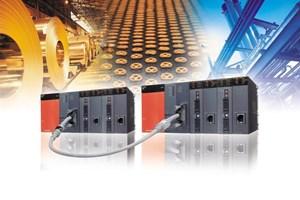
Despite the emergence of alternative control solutions, the popularity of the PLC endures. Mitsubishi Electric product manager Hugh Tasker offers ten reasons why you still need a PLC.
There was a time, not so long ago, when the PLC stood as the only viable option for control in industrial automation applications. Today engineers have more choice in the form of industrial PCs, soft PLCs and panel PCs that ape the functionality of the PLC/HMI combination. Engineers could even, if they felt so inclined, build their own custom controller around a Raspberry Pi board.
Despite the emergence of these new control options, there are still many compelling reasons to use a PLC. Here are just ten of them.
1. Peace of mind
Both PLCs and PCs have come a long way since their humble beginnings but there is a big difference in how these distinct control options continue to evolve and this has significant implications for long term support. The managed evolution of the PLC means that vendors can and do support their products over long periods of time, both in terms of hardware and software. That means, with Mitsubishi Electric for example, that we could take the application program for example, from a 20 year old FX PLC and import it straight into a brand new FX5U. A user could install the very latest controller and have the application back up and running almost immediately. How would you even contemplate doing the same with a PC based solution?
There are many industries where that level of support is not simply desirable but actually a baseline requirement. There is talk in the water industry, for example, of framework suppliers having to be able to assure support of control systems for up to 20 years. Of course the control hardware will change over that time but PLC users have the peace of mind of knowing that the software will always port to the latest controller.
2. Inherently robust and reliable
The modern industrial PC provides a stable computing platform and it would be unfair to suggest that it locked-up and crashed with the unerring regularity of a desktop PC. However, it is not on equal terms with a PLC.
The real time operating system that runs alongside Windows on a typical industrial PC has been designed to try to provide the same level of robustness as you get from a PLC CPU.
If a PC operated in complete isolation, perhaps that would be the end of the reliability debate. However no controller does; there are peripherals to connect, I/O to network and other components to talk to, each requiring their own drivers to be loaded into the PC. Will the drivers for all of these products have been tested in combination and thoroughly proved? It seems unlikely. Clashes can and do occur and problems can be exacerbated every time those drivers are updated.
It is almost inevitable, then, that an industrial PC will crash and what might that mean for the control process? By contrast, when did you last hear of anyone needing to reboot a PLC after a software crash – probably never…
3. Scalability
The biggest selling PLCs by volume covering the largest spread of applications are those offering 40 I/O or less. In such applications, the PLC represents a highly affordable solution, much more so than an equivalent PC-based system. However, the same essential platform is also scalable to tens of thousands of I/O, with users able to port control programs to bigger PLCs, benefit from the same programming environment and take advantage of completely modular hardware.
The customisation potential of the PLC is enormous, with numerous ways to expand the functionality but all without ever leaving a common platform.
4. Programming
Even today, for every engineer coming out of university who is fluent in structured text programming and for every engineer who is comfortable working in C or C++, there are probably ten more who only want to use ladder logic, particularly at the lower I/O end of the application spectrum.
In between, there are those applications that might start small, perhaps written in ladder but then grow as the application evolves – taking advantage of the scalability of the PLC platform – benefiting from the ability to write the control program in structured text and to drag and drop software function blocks that will take away much of the configuration effort.
At Mitsubishi Electric we offer a C++ programming option for our PLCs, so we marry a flexible hardware platform to high level language programming capability Of course these same programming options are available on a PC platform, but the levels of modularity and scalability that PLC software tools offer – in much the same way as with the hardware – simply aren’t there.
5. Integration of other automation equipment
For many automation engineers, there is never any need to move outside the product portfolio of a single vendor, with suppliers such as Mitsubishi Electric able to address every requirement from HMIs, drives, servos, motion control, safety and robotics to low voltage power distribution products, power management meters and CNC systems. Because all of these components have been designed to work together, engineers benefit from ‘plug and work’ integration.
There are some automation vendors that sell industrial PCs who can claim to offer a broadly similar product portfolio but certainly not many. However, the real challenge comes when engineers need to look outside of a single brand and integrate third party components.
With the modern PLC, integration of third party hardware is a breeze; can the same be said for integration on a PC platform? Are the drivers for those third party modules guaranteed to work? How much configuration effort will be required? Perhaps more importantly, will there be the same assurance of ongoing compatibility through the operational lifespan of the control platform?
6. Performance
In terms of power and performance, Moore’s law of computational capability is just as applicable to PLCs as it is to PCs – indeed many people forget that the modern PLC is a powerful computer in its own right. The latest incarnation of the Mitsubishi Electric FX PLC, for example, is 150 times faster than the original.
Just how powerful the modern PLC is only really becomes apparent when you look at the speed of execution of instructions, with the latest designs offering sub-nanosecond performance. You might be able to ‘pimp’ a PC to offer similar performance but the PLC offers you that straight out of the box. Then there is the increased bus speed and the ability to synchronise multiple I/O in a high speed system, delivering a much more responsive control system. Again, this is much more difficult to achieve outside of the PLC environment.
7. Security
The arrival of high profile viruses such as stuxnet have made us all realise that automation systems have become targets, as malicious hackers look to cripple the operations of big companies or vital utilities. With its familiar operating system and inherent network vulnerabilities, the PC can represent the soft underbelly of the control system for anyone trying to break in. The operating systems of PLCs, by contrast, are much less visible to the outside world and this has traditionally offered a layer of insulation against malicious intent. This does not mean, however, that PLC manufacturers take security for granted. Mitsubishi Electric, for example, enables programs to be password protected, with different levels of access granted to different levels of user.
Further remote access preferences can be set such as access only being granted to specific IP addresses, protecting PLC software and the wider automation system even in heavily networked applications.
8. Intellectual property
Extending the security argument, a concern for companies with global development teams or where the end system will be installed overseas is that the control software will be copied by unscrupulous third parties and all too quickly developed as a competitive, lower cost product.
Where this is a valid concern across all control platform options, the PLC manufacturers have taken significant steps to address the problem. With Mitsubishi Electric products, encrypted code embedded in hardware and software can be set to execute at a given time. That might mean that the system is open to developers and installers right through to the end of commissioning of the application, but then switches on to protect the system from further interaction.
9. Maintenance
Every automation system, regardless of platform, needs routine maintenance; perhaps to manage hardware or software upgrades, as part of scaling up the system as the application evolves, or, to swap out faulty components. The ease with which this can be accomplished is a major attraction of the PLC. Programs and configuration settings for just about any connected component can be stored to SD card via a slot in the PLC CPU, simplifying any maintenance requirements.
Indeed, even if the PLC CPU itself were to fail, a new unit could be snapped onto the backplane and the original program loaded direct from a bootable backup on the SD card, getting the system back up and running straight away.
At the same time, there are none of the requirements for ongoing firmware updates that plague PC-based systems, with the constant worry that any one of these will clash with another and bring the system to its knees. The very fact that the PC is a multi-purpose system is one of its greatest weaknesses in the automation environment.
10. Reduced IT requirements
One of the questions in any automation system, even more so as integration between the plant floor and higher level systems comes into the equation, is the allocation of responsibility between the automation engineering team and the IT team. This can be a source of friction but perhaps more importantly there is the almost inevitable lack of understanding from each about the requirements of the other.
With PLC-based automation, the demarcation between engineering and IT is clear, with little or no need for the IT team to have to get involved on the plant floor. Further, with products such as Mitsubishi’s Electric’s MES module – which plugs into the PLC backplane and provides direct connection with higher level databases – whole layers of PC products can be eliminated from the automation system altogether, making the demarcation between automation and IT even clearer.
We can see, then, that there are many good reasons why the PLC will continue as the mainstay of automation system control and that’s before we’ve even considered issues such as redundancy, safety and more, plus the capability of the modern PLC to perform many of the complex maths functions that could once have only been performed in a PC-based system.

Of course the requirements of every automation system should lead to the selection of the appropriate control solution on merit but the PLC offers many reasons to be the platform of choice.

Powered by Blogger.