In casting process, first few castings will be inspected dimensionally and the pattern is qualified afterwards, only few random inspection will be done. Every casting must be inspected for finding out the defects in casting process.

Different methods of inspection for finding out defects in casting process are discussed below
1.      Visual Inspection
2.      Hydrostatic Pressure Test
3.      Magnetic Particle Inspection
4.      Radiographic Examination
5.      Ultrasonic inspection
6.      Dye Penetrant Inspection
7.      Coin Testing

1. Visual Inspection
Common defects such as surface roughness, obvious shifts, omission of cores and surface cracks can be detected by a visual inspection of the casting. Cracks may also be detected by hitting the casting with a mallet and listening to the quality of the tone produced.
Visual inspection with an articulating fiberscope

2. Hydrostatic Pressure Test
§  The Hydrostatic pressure test is conducted on a casting to be used as a pressure vessel.
§  In this test, first all the flanges and ports are blocked.
§  Then the casting is filled with water, oil or compressed air, Thereafter, the casting is submerged in a soap solution when any leak will be evident by the bubbles that come out.
Hydrostatic pressure tester

3. Magnetic Particle Inspection
Maintenance Squadront performs a magnetic particle inspection
The Magnetic particle test is conducted to check for very small voids and cracks at or just below the surface of a ferromagnetic material. The test involves inducing a magnetic field through the section inspection. this done, the powdered ferromagnetic material is spread out onto the surface. The presence of voids or cracks in the section results in an abrupt change in the permeability of the surface; this, in turn, causes a
leakage in the magnetic field. The powdered particles accumulate on the disrupted magnetic field, outlining the boundary of a discontinuity.

4. Radiographic Examination
The radiographic method is expensive and is used only for subsurface exploration. In this, both X-rays and γ-rays are used. With γ-rays, more than one film can be exposed simultaneously; however, x-ray pictures are more distinct. Various defects, like voids, nonmetallic inclusions, porosity, cracks and tears, can be detected by this method. The defects being less dense, film appears darker in contrast to the surrounding.

5. Ultrasonic Inspection
In the Ultrasonic method, an oscillator is used to send an ultrasonic signal through the casting. such as signal is readily transmitted through a homogeneous medium. However, on encountering a discontinuity, the signal is reflected back. This reflected signal is then detected by an ultrasonic detector. The time interval between sending the signal and receiving its reflection determines the location of the discontinuity. the method is not very suitable for a material with a high damping capacity (e.g. cast iron) because in such a case the signal gets considerably weakened over some distance.
Ultrasonic inspection

6. Dye Penetrant Inspection (DPI)
Maintenance Squadron non-destructive inspection specialist performs a liquid penetrant inspectionThe dye penetrant inspection method is used to detect invisible surface defects in a nonmagnetic casting. The casting is brushed with, sprayed with, or dipped into a dye containing a fluorescent material. The surface to be inspected is the wiped, dried and viewed in darkness. The discontinuous in the surface will then be readily discernible.


7. Coin Testing
By hitting with coin on to the component and by hearing the sound coming from the casing, the presence of defect can be estimated.


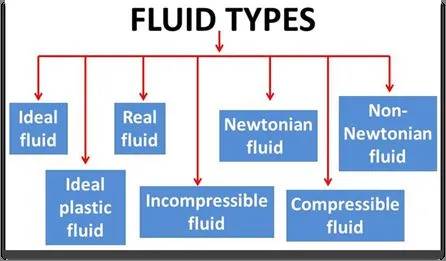
Fluids are divided into five types they are:
  • Ideal fluids
  • Real fluids
  • Newtonian fluids
  • Non-Newtonian fluids
  • Ideal plastic fluids

Ideal Fluids:
An ideal fluid is defined as a fluid which is in-compressible and the one that does not have viscosity. Ideal fluids are imaginary fluids. This exist some viscosity.
Real Fluids:
A real fluid is defined as a fluid which possesses viscosity. In actual state all fluids are real fluids.
Newtonian fluids:
In a real fluid the shear stress is directly proportional to the velocity gradient or shear strain, which is known as Newtonian fluids.
Non-Newtonian fluids:
In a real fluid the shear stress is not proportional to the velocity gradient or shear strain, which is known as Non- Newtonian fluids.
Ideal plastic fluids:
In a fluid the shear stress is more than the yield value. The shear stress is proportional to the rate of velocity gradient or shear strain is known as ideal plastic fluids.
Thermodynamic properties:
Fluid consists of either liquid or gases. In case of gases they are compressible fluids. The thermodynamic properties play an important key role. Due to the change in temperature and pressure the gases undergoes high variation in densities. So the relation between the absolute temperature, absolute pressure and specific volume is
= RT
 = RT
P= Absolute pressure of a gas
R = gas constant
T= Absolute temperature in kelvin
ρ = Density of a gas.
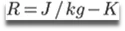
R Dimension
The gas constant R value must be depends on the particular gas.
In MKS Unit R value is  
In SI units  
Isothermal Process:
At constant pressure the change in density occurs then the process is known as isothermal process. The relation between pressure and density is:
p/ρ= constant
Adiabatic process:
The change in the density must be occurs without heat change to and fro the gases is known as Adiabatic process.
Due to friction there is no heat generation in the gases, so the relation between the density and pressure is
K value for air is 1.4
Universal gas constant:
It is also known as gas constant, ideal gas constant, molar gas constant. It is denoted by the letter R.
In SI units R value is 8314 J/kg-mole.
Compressibility and bulk modulus:
The reciprocal of bulk modules of elasticity is known as compressibility. It is defined as the ratio of compressive stress to volumetric strain.
Consider a cylinder and piston is inserted into it, when the force is applied on the piston then the pressure is increased to p+dp. Then the volume present in the cylinder is decreased to   to  .
Volumetric strain must be =
Bulk modules = K = increase in pressure / volumetric strain
Compressibility = 1/ K
For gases relation between Bulk modulus and pressure:
K=pk


The control and movement of the lathe machines can be done with the help of computers. The function of the lathe machine actuated by the Computer Numerical Controls (CNC) is known as CNC lathe. Have a look at the figure for a clear idea –
Different Parts of CNC Lathe Machine

CNC Lathe Machine Parts

Vice: Vice is actually like a clamp which holds the job. At the time of machining the material must be held tightly otherwise it will shake or vibrate and can fly out which can cause serious damage. So the main function of the vice is to hold the material in the perfect position for cutting and shaping.
Guard: The guard provides protection to the CNC machine operator. The guide keeps the dangerous areas enclosed with some kind of barrier. Dangerous area means the spaces from where chips can be shoot and head towards the machine operator.
Chuck: This part holds the material that is needed to be shaped or cut. Materials should be fastened to the chuck with care otherwise the material can fly out of the chuck causing damage. Sometimes chucks are used to hold the cutting tool.
Motor: The motor is the main mover in the CNC lathe. This devise rotates the chuck of the CNC.
Lathe Bed:  It is the base of the lathe machine. Usually CNC machines use special foundation for making the machine stationary so that the lathe bed doesn’t move or vibrate.
Cutting Tool:  Very high quality steel is used to make the cutting tools. Different types of cutting tools are used to shape the material.

Advantages of CNC Lathe

·         It can work continuously all over the year. It can be run 24 hours a day for 365 days! It needs some periodic maintenance for a short period of time.
·         CNC machines can thousands of products having same shape and similar dimensions. Once the machine is programmed with the design it can produce tons of products without any deviation from the design.
·         CNC machines doesn’t need skilled workers. Less trained people can operate the machine.
·         Improved software can update the machine output.
·         Virtual software can provide the training of the operator which helps him while running the machine in real life.
·         Modern design software can be incorporated with the CNC to make precise products.
·         There is no need to make prototypes. A company can go to direct production if they have CNC machines.
·         It works automatically so no need for huge man power or money to run the machine.

Disadvantages of CNC Lathe Machines

·         CNC lathes are very expensive then the conventional manual lathes.
·         The operation of the CNC lathes is very simple. There isn’t any need of skilled personnel to run the machine. As a result engineers are reluctant to learn the basic machining operations.

·         Very few people are needed to run a CNC machine. On the other hand manual lathes always needs an operator to complete the job. Expansion of CNC technology can cause unemployment.


Answer: B

Explanation:
Weight B requires a force equal to 5 Kg whereas A requires a force equal to 10
Single pulley questions are relatively straightforward.
If the pulley is fixed, then the force required is equal to the weight. If the pulley moves with the weight, then the
force is equal to half of the weight.
Another way of thinking about this is to divide the weight by the number of sections of rope supporting it to obtain the force needed to
lift it.
In A there is only one section of rope supporting the weight, so 10/1 = 10Kg required to lift the weight. In B there are two sections of rope supporting the weight,
so, 10/2 = 5 Kg required to lift it.


The zeroth law of thermodynamics states that if two systems are both in thermal equilibrium with a third system, then the first two systems are also in thermal equilibrium with each other.
Key Takeaways: Zeroth Law of Thermodynamics
  • The zeroth law of thermodynamics is one of the four laws of thermodynamics, which states that if two systems are in thermal equilibrium with a third system, then they are in thermal equilibrium with one another.
  • Thermodynamics is the study of the relationship between heat, temperature, work, and energy.
  • Most generally, equilibrium refers to a balanced state that does not change overall with time.
  • Thermal equilibrium refers to the situation where two objects that can transfer heat to each other stay at a constant temperature over time.
Understanding Thermodynamics
Thermodynamics is the study of the relationship between heat, temperature, work—which is performed when a force applied to an object causes that object to move—and energy, which comes in many forms and is defined as the capacity to do work. The four laws of thermodynamics describe how the fundamental physical quantities of temperature, energy, and entropy change in various situations.
As an example of thermodynamics in action, placing a pot of water on a heated stove will cause the pot to heat up because heat is transferred to the pot from the stove. This in turn causes the molecules of water to bounce around in the pot. The faster movement of these molecules is observed as hotter water.
If the stove had not been hot, it would not have transferred any thermal energy to the pot; thus, the water molecules could not have begun moving faster and the pot of water would not have heated up.
Thermodynamics emerged in the 19th century, when scientists were building and improving steam engines, which use steam to help move an object such as a train.
Understanding Equilibrium
Most generally, equilibrium refers to a balanced state that does not change overall with time. This does not mean that nothing is happening; rather, that two influences or forces are balancing each other out.
Consider, for example, a weight hanging from a string attached to the ceiling. At first, the two are in equilibrium with one another and the string does not break. If more weight is attached to the string, however, the string will be tugged downward and may eventually break as the two are no longer in equilibrium.
Thermal Equilibrium
Thermal equilibrium refers to the situation where two objects that can transfer heat to each other stay at a constant temperature over time. Heat can be transferred several ways, including if the objects are in contact with one another or if heat is radiated from a source like a lamp or a sun. Two objects are not in thermal equilibrium if the overall temperature changes with time, but they can approach thermal equilibrium as the hotter object transfers heat to the colder one.
Consider, for example, a colder object touching a hotter object—like ice that has been dropped in a hot cup of coffee. After some time, the ice (later water) and the coffee will reach a certain temperature that is in between that of the ice and the coffee. Though the two objects were not in thermal equilibrium at the beginning, they approach—and eventually reach—thermal equilibrium, the temperature in between the hot and cold temperatures.
What Is the Zeroth Law of Thermodynamics?
The zeroth law of thermodynamics is one of the four laws of thermodynamics, which states that if two systems are in thermal equilibrium with a third system, then they are in thermal equilibrium with one another. As seen from the above section on thermal equilibrium, these three objects will approach the same temperature.
Applications of the Zeroth Law of Thermodynamics
The zeroth law of thermodynamics is seen in many everyday situations.
  • The thermometer may be the most well-known example of the zeroth law in action. For example, say the thermostat in your bedroom reads 67 degrees Fahrenheit. This means that the thermostat is in thermal equilibrium with your bedroom. However, because of the zeroth law of the thermodynamics, you can assume that both the room and other objects in the room (say, a clock hanging in the wall) are also at 67 degrees Fahrenheit.
  • Similar to the above example, if you take a glass of ice water and a glass of hot water and place them on the kitchen countertop for a few hours, they will eventually reach thermal equilibrium with the room, with all 3 reaching the same temperature.
  • If you place a package of meat in your freezer and leave it overnight, you assume that the meat has reached the same temperature as the freezer and the other items in the freezer


The answer is A.
Explanation:
The lever is not the same length on both sides Of the fulcrum. As, whenever force is applied to a point more distant from the fulcrum, less force is needed to accomplish the same amount of work. Both levers must accomplish the same amount of work (i.e., move a 50 pound load); however, Lever A will do so more easily because there is more distance from the point of force to the fulcrum on Lever A than on Lever B.

More about Levers:

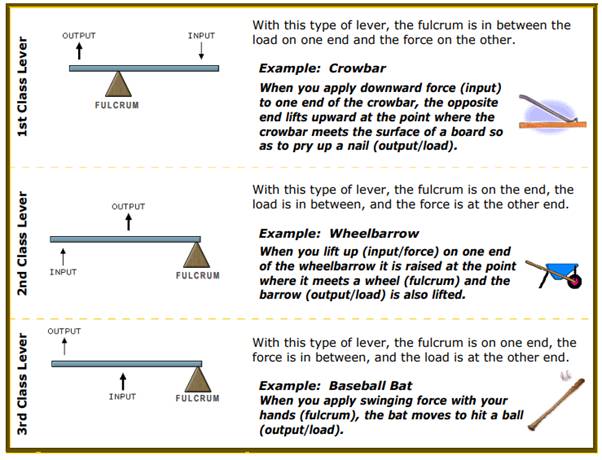
A lever is a simple machine made with a bar that moves on a surface point called a fulcrum. Force (input) is exerted upon the bar to move (output) an object or load. The following information about these simple machines will help you answer questions about how they work.

As depicted below, there are several types of levers which vary according to the location of the fulcrum:

Most questions about levers focus on the 1st class of lever and are generally designed to test your understanding of the concepts of leverage and weight distribution. 

Key Facts

·         The fulcrum can be moved depending on the weight of the load to be lifted or the force you wish to exert.

·         The closer the load is to the fulcrum, the easier it is to move.

·         The shorter side of a lever has more work to do to counter the effect of a longer side.

·         Generally, whenever force is applied to a point more distant from the fulcrum, less force is needed to accomplish the same amount of work (i.e., more leverage is given). Hence, an equal amount of force will do more work as it moves away from the fulcrum.


 Mechanical engineering is a lucrative career path for engineering students. Apart from job, there are many avenues to get into entrepreneurship for mechanical engineers. The object of crafting this article is to provide most profitable mechanical engineering business opportunities to the new entrepreneurs. These businesses can be initiated with small startup capital investment.
Mechanical engineering involves the design, production, and operation of machinery. In India, small business manufacturing in light engineering segment is considered as a profitable investment opportunity. There are many fields that involve in the large-scale production line. These are commonly computer-aided design, product lifecycle management to design and analyze manufacturing plants, industrial equipment and machinery, heating and cooling systems, transport systems, aircraft, watercraft, robotics, medical devices, weapons, and others. Here, we intend to provide a list of small-scale mechanical engineering business opportunities for the new entrepreneurs.
#1. Aluminium Door Window
Aluminium door window manufacturing business is one of the profitable small business manufacturing opportunity in light engineering industry sector. You can start this business with small startup capital.
#2. Barbed Wire Production                                   
With an automatic barbed wire automatic machine, any individual can initiate this business as a home based and small scale basis. Barbed wire is widely used for protection and security purpose. Manufacturing process is simple and raw material widely available in the wholesale market.
#3. Brake Linings
Brake Linings are generally known as brake shoes. These are used in light and heavy commercial vehicles, passenger cars, scooters as friction materials for stopping, speed reducing of the vehicle. A small scale manufacturing is possible of this item.
#4. Clutch Plates Manufacturing
The clutch is a mechanism which enables the rotary motion of one shaft to be transmitted, when desired, to a second shaft the axis of which is coincident with that of the first. The increasing population of vehicles has created an enormous market opportunity for this product.
#5. Electro Coating
Electro Coating is a method of giving a metal an organic finish by using electrical current to deposit the paint. Some of the major application areas are agricultural equipment, appliances, automobiles, electrical switch gear, fasteners etc.
#6. Enamelled Copper Wires
The consumption of Enamelled copper wires has been increasing in the country all over these years due to its extensive usage in electrical industries, automobiles and electronics industries. Entrepreneurs can initiate small and medium scale manufacturing operation of this product.
#7. Gem Clip Manufacturing
Gem clip or paper clip is an essential item as education and office stationery. Gem clip making process is simple. An entrepreneur with low startup capital can initiate this business as the home based also. Gem clip making business can be operated on a part-time or full-time basis. There is a huge demand of 100% stainless steel make gem clip globally.
#8. Hacksaw Blades Manufacturing
A hacksaw blade is a common cutting tool used in all engineering industries. It is so popular and essential that the hacksaw blade is required primary to cut all metals and non-metals. You can start a small scale manufacturing with moderate capital investment.
#9. King Pins & Shackle Pins
King Pins are getting used to connecting piston with the connecting rod in any engine. These are used in automobile engines as well as stationary engines used for power generation or for lifting water when coupled with water pumps. Shackle pins are used to fit springs with the shackle brackets in any automobile. Both are replaceable items and thus create immense opportunities as automobile components.
#10. Non-stick Cookware
This is a consumer household kitchen appliances. In modern lifestyle, non-stick cookwares are the essential items for women. The business is very profitable. You can start with two or three product lines. This will attract moderate capital investment.
#11. Nuts Bolts Manufacturing
Nuts bolts making business is considered as light engineering product manufacturing. Nuts and bolts are a type of industrial fasteners used in various products in the construction industry. Nuts and bolts consist a major link in the family of industrial fasteners and are used by every industry. Bolt is a piece of metal rod, whose one end is unsettled and another end is threaded. The nut is the item which rolls on these threads.
#12. Paper Pins Manufacturing
Paper pins are very essential office stationaries. This is one of the most low-cost manufacturing business. You can start from home also with automatic pin making and coating machines.
#13. Pilfer Proof Caps
Pilfer Proof caps are being used in Pharmaceuticals, Chemicals, Food industries and Distilleries as Glass bottle closures. This is a one-time consumable item and popular B2B product in the liquid packaging industry.
#14. Slotted Angles Production
This is one of the most profitable mechanical engineering business opportunities that can be started as medium scale basis. Storage racks, tables, boards, frames etc can be assembled easily within shortest time with slotted angles. They are widely used in offices, industries, storage rooms, households. The consumption is increasing with the increase in standard of living of the people.
#15. Stainless Steel Cutlery
Stainless steel Spoons, Forks and Stainless steel knives are very commonly used items in households, hotels and restaurants. The demand for this product is increasing very steadily. Specific BIS certification is available in India.
#16. Tie-Rod End Assembly And Gear Shafts
Tie-rod end assemblies and gear shafts are two important components in a vehicle. Steering system provides the controlling system in a vehicle to turn left or right. Tie-rod forms the main component in the steering system. Gear shafts are required to keep the vehicle in motion at various speeds and loads
#17. U-Clamps
The U-Clamp, which is in the shape of U refers to the clamp which is used to hold together the several layers of leaf springs of an automobile and hold them onto the axle. This is a very commonly used spare part in automobile aftermarket. You can start manufacturing as small scale basis.
#18. Weighing Machines
Weighing machines are essential tools for industrial and retail use. With the growth of education, commercial activities, industrial production and consumerism the usage of weighing machines are widespread. The manufacturing operation can be initiated with moderate capital investment.
#19. Welding Electrode
Welding Electrodes have widely used consumables in all industries where welding jobs are done. Apart from large industry use, the product has demand in the small welding unit market.
#20. 3D Designing & Printing
3D designing and printing are innovative technology in the engineering field. This is one of the most profitable and trending mechanical engineering business opportunities for the new entrepreneurs. With 3D designing technology, the expenses of modelling have got reduced considerably.
Here, we have listed some of the top mechanical engineering business opportunities for the entrepreneurs. To start these businesses, it is not mandatory that you have to be an engineer. However, the degree is a plus. If you have any profitable idea in this field mention it on our social media platforms.

Powered by Blogger.